
Tagline goes here, please think about one (like Vu Dan Tan's quote or motto), or just omit it
T (+84) 842 377 195
Email: info@vudantanmuseum.org
Vũ Dân Tân Museum
443 Ngọc Thụy, Long Biên, Hà Nội
❝ Decades before, at the height of the American War when piano-playing at home for pleasure was perceived as decadent, Vu Dan Tan entertained the street with sonatas played on his baby-grand piano. Tan, unperturbed by possible official disproval of Beethoven and Mozart, took his favorite composers into the Hanoi streets. Far beyond entertainment, music for Vu Dan Tan was a means of expanding private physical space, an ally, and an expression of freedom in rigidly–controlled Hanoi as his playing infiltrated public space. Later, when Vu Dan Tan incongruously crammed his tiny living quarters with four upright pianos, extravagant by any standard, the artist again proclaimed his liberty through the possibility of music, its intangible, border-defying, universally–understood power materialised by the instruments. ❞
Iola Lenzi, “Music as Freedom. The Place of Sound in the Visual Practice of Vu Dan Tan”, in: Vu Dan Tan and Music, Goethe Institut, Hanoi, 2016, p. 20
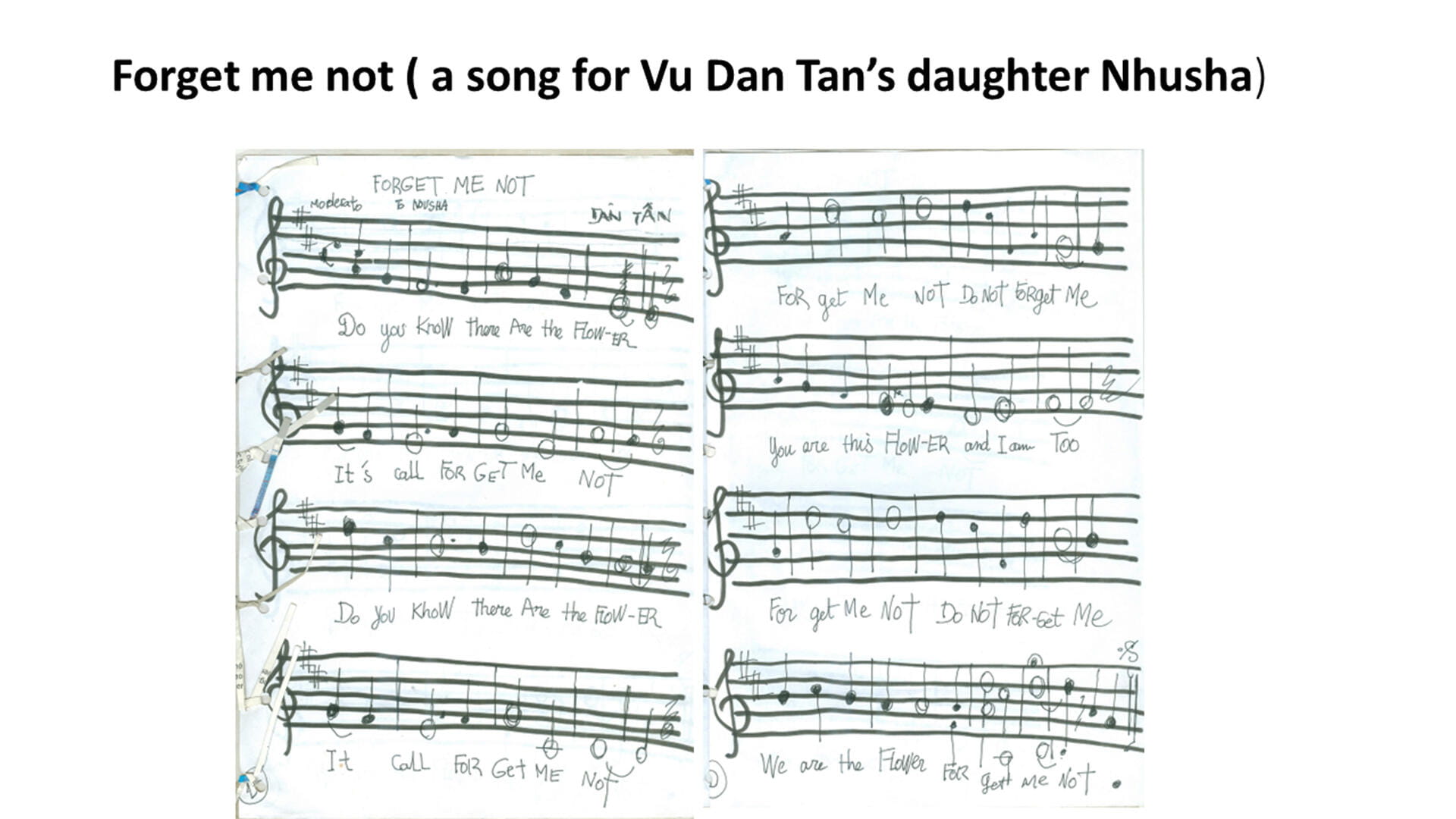
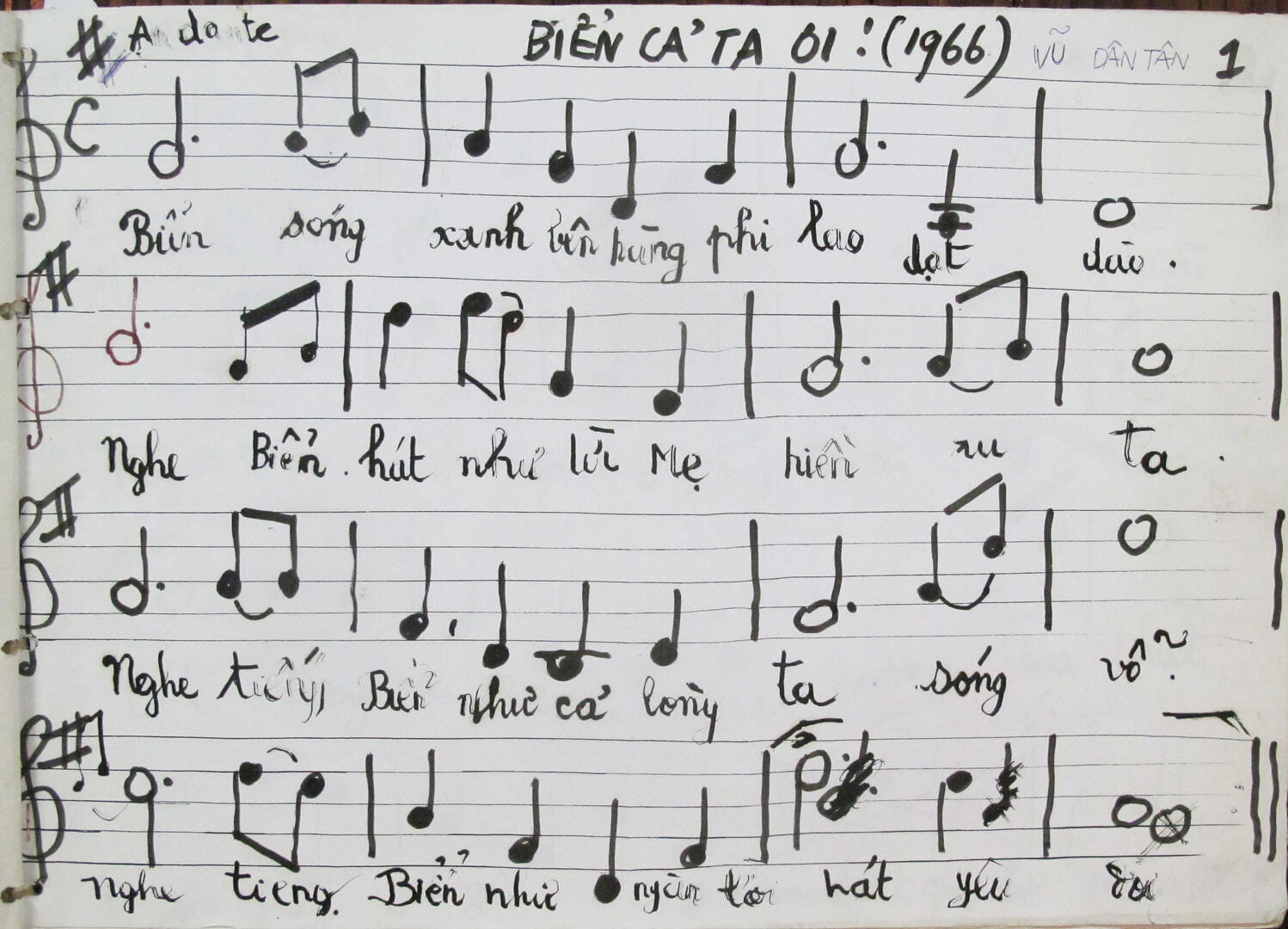
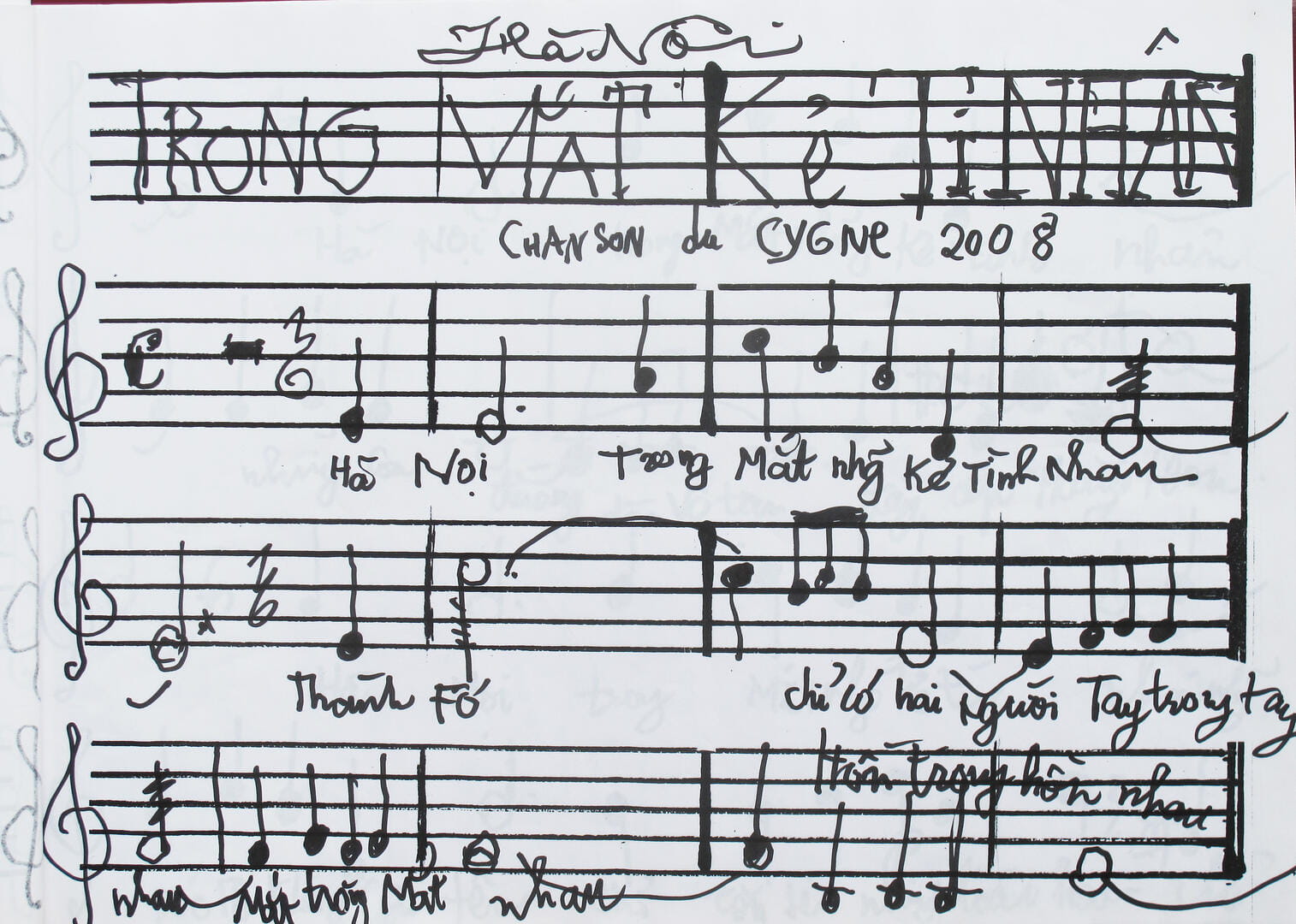
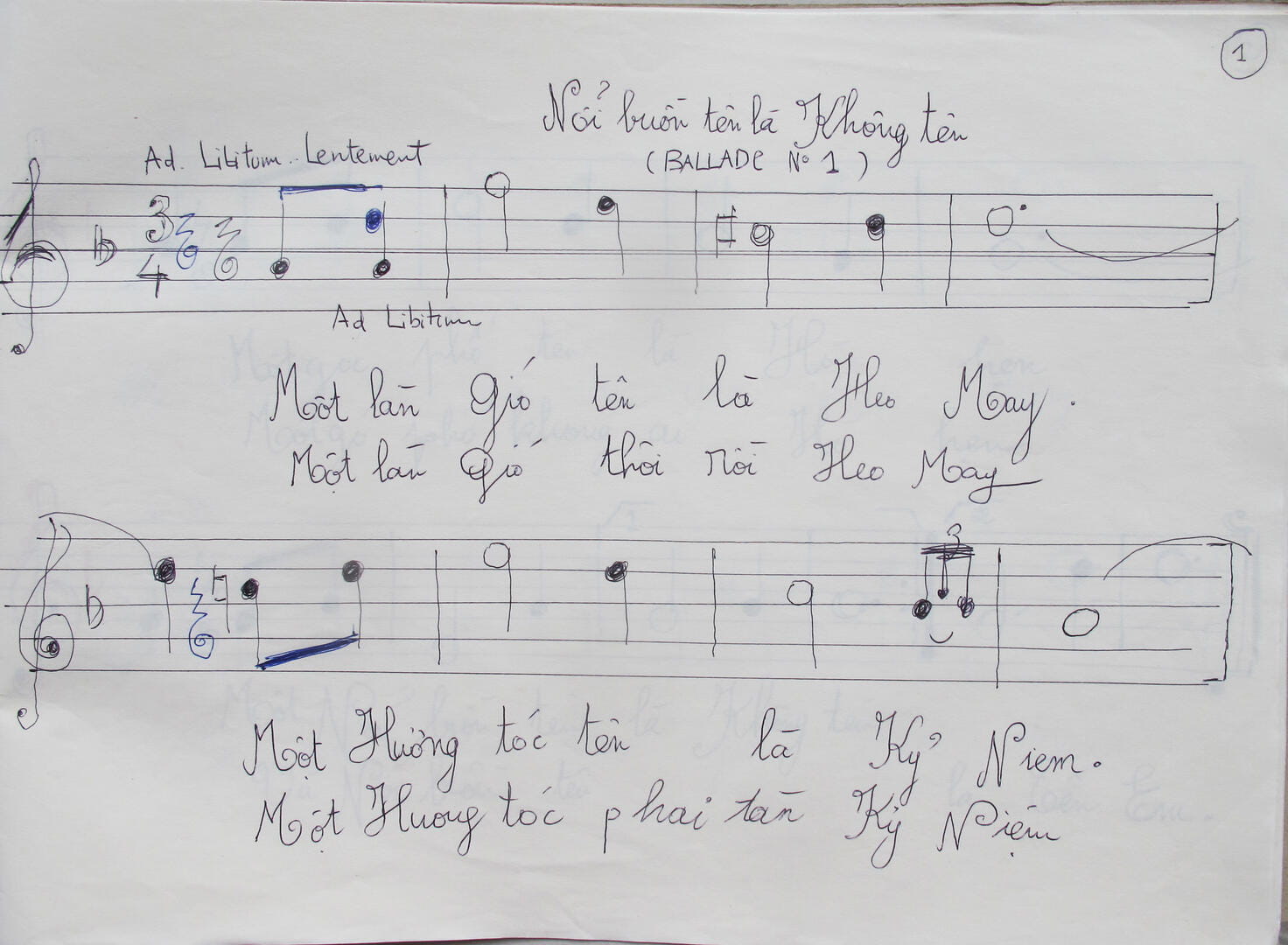
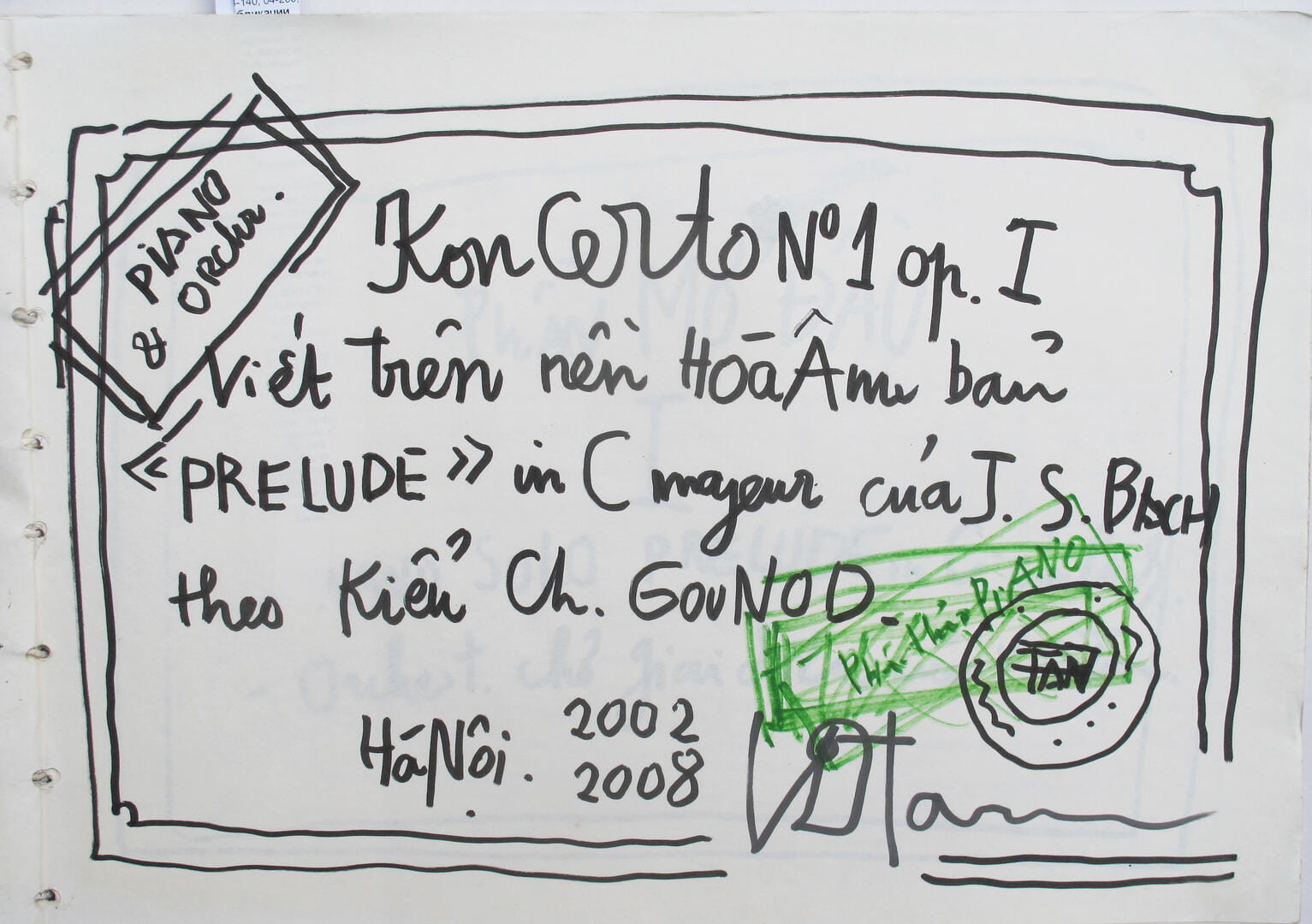
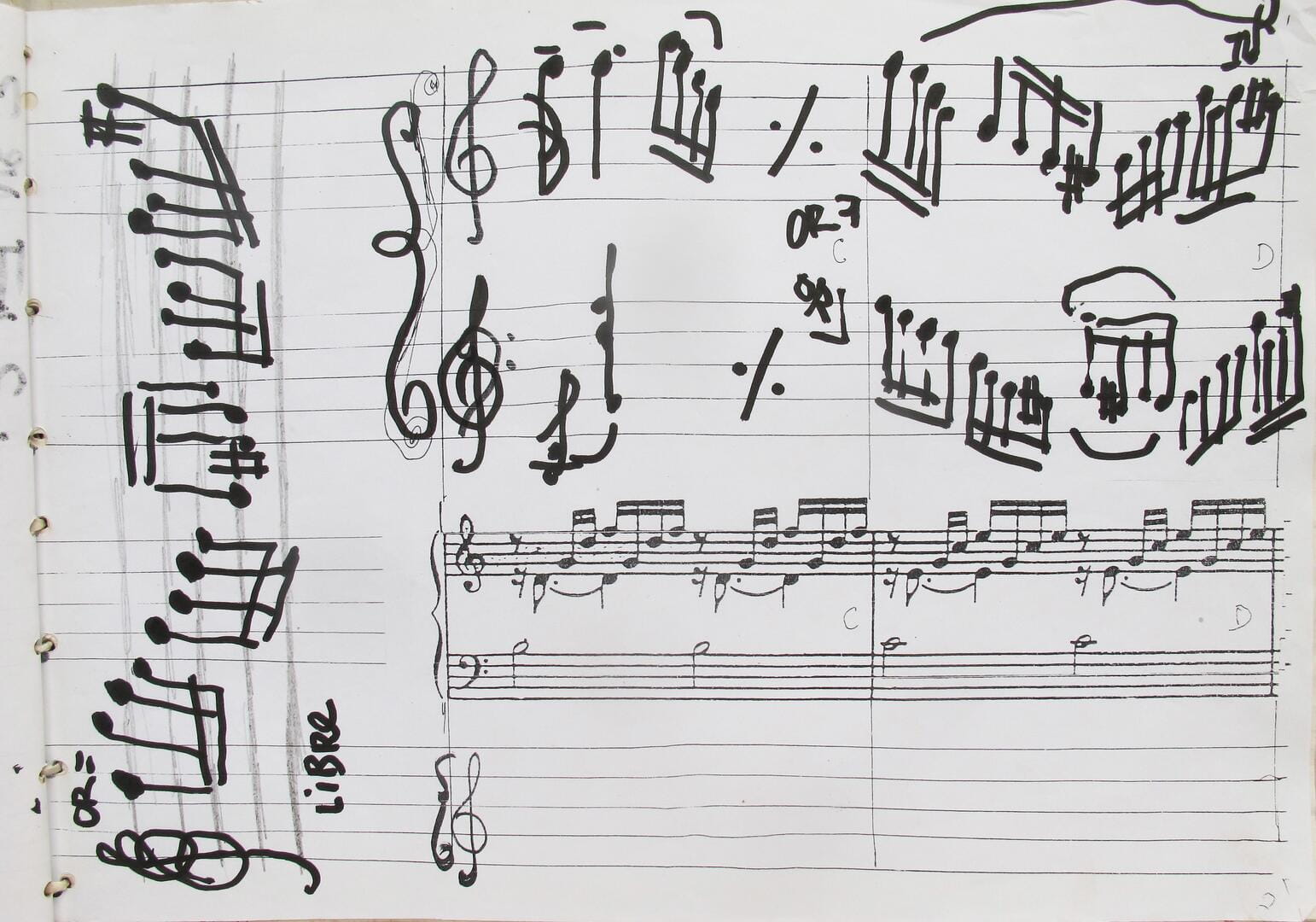
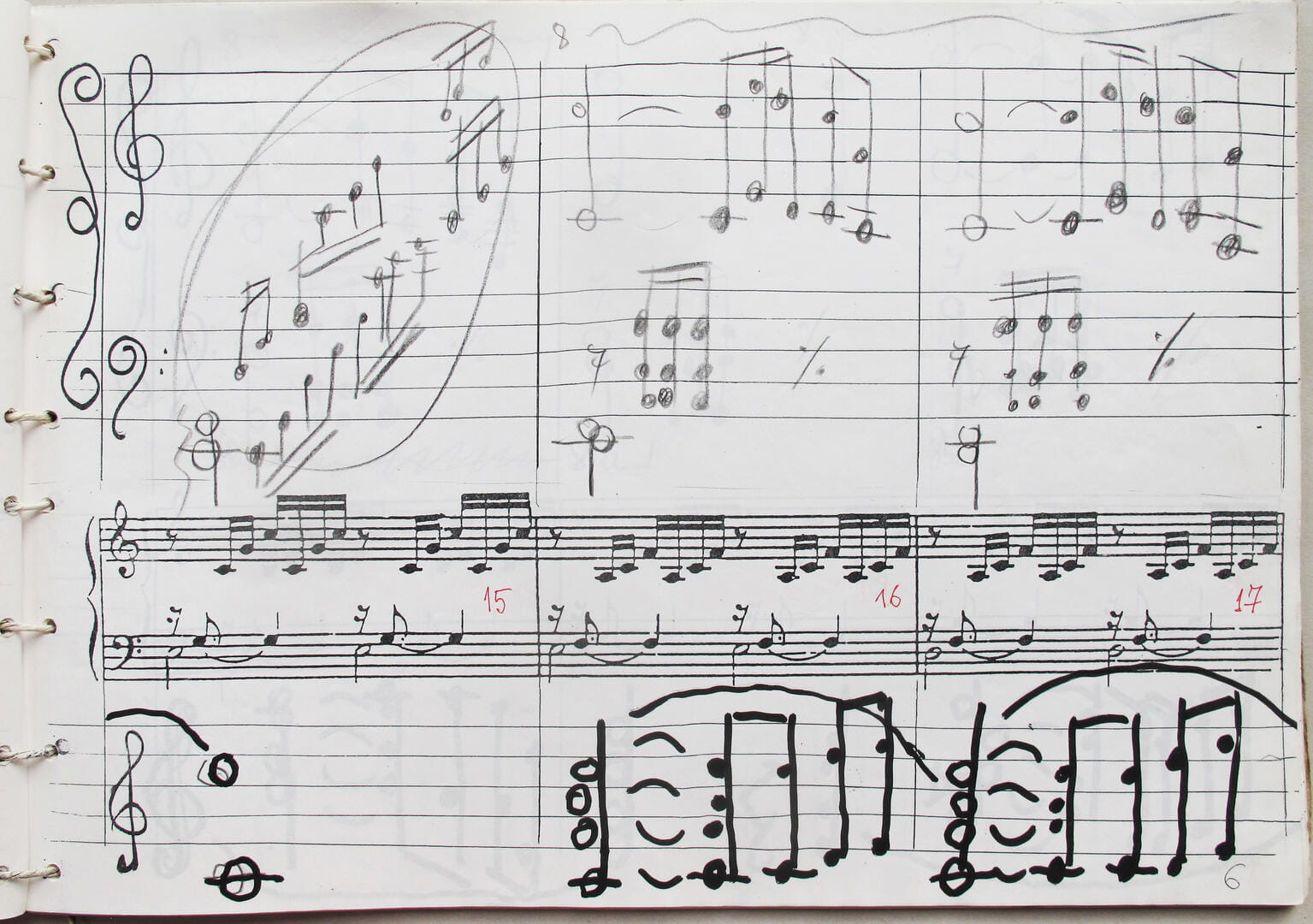
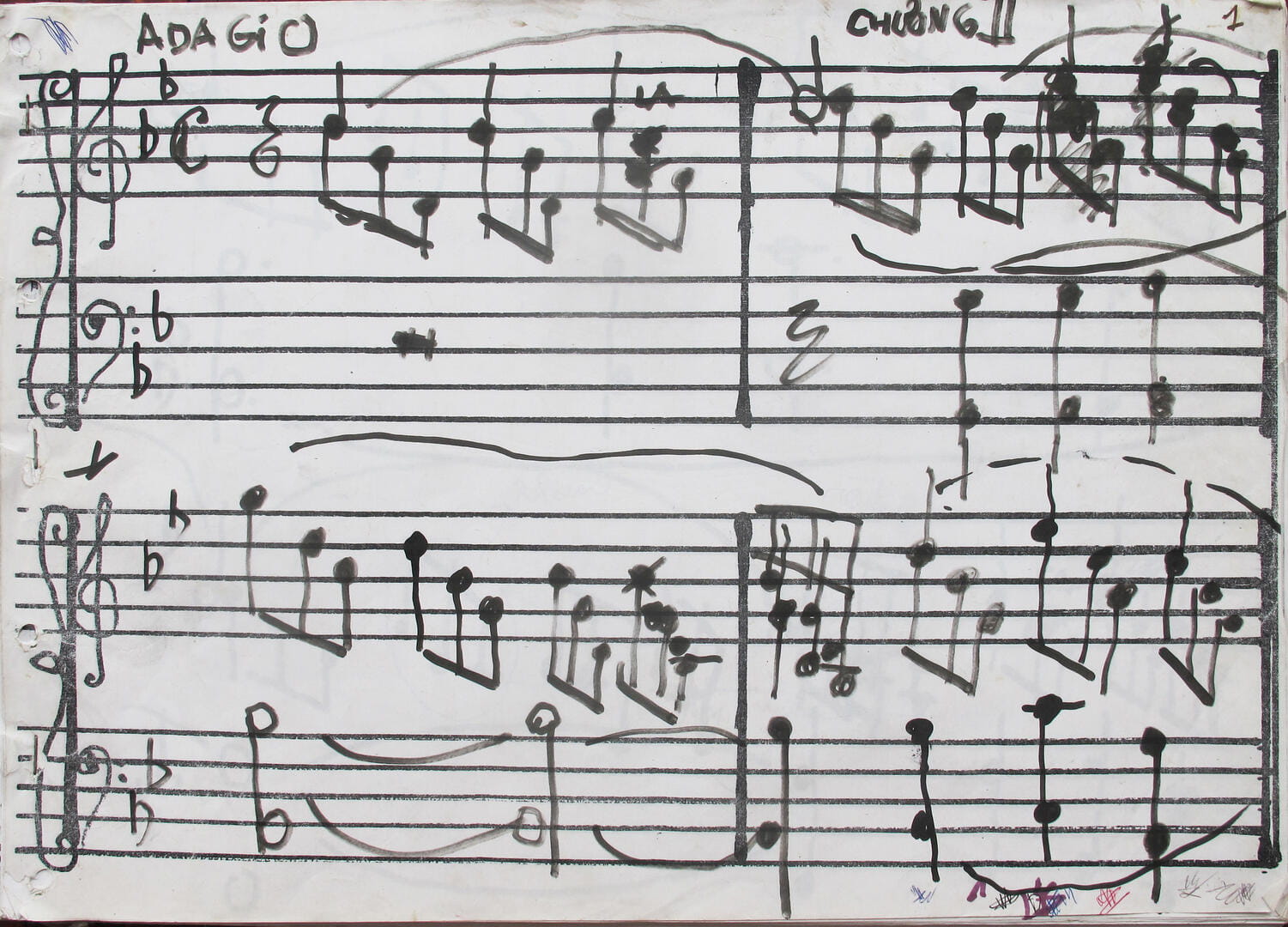
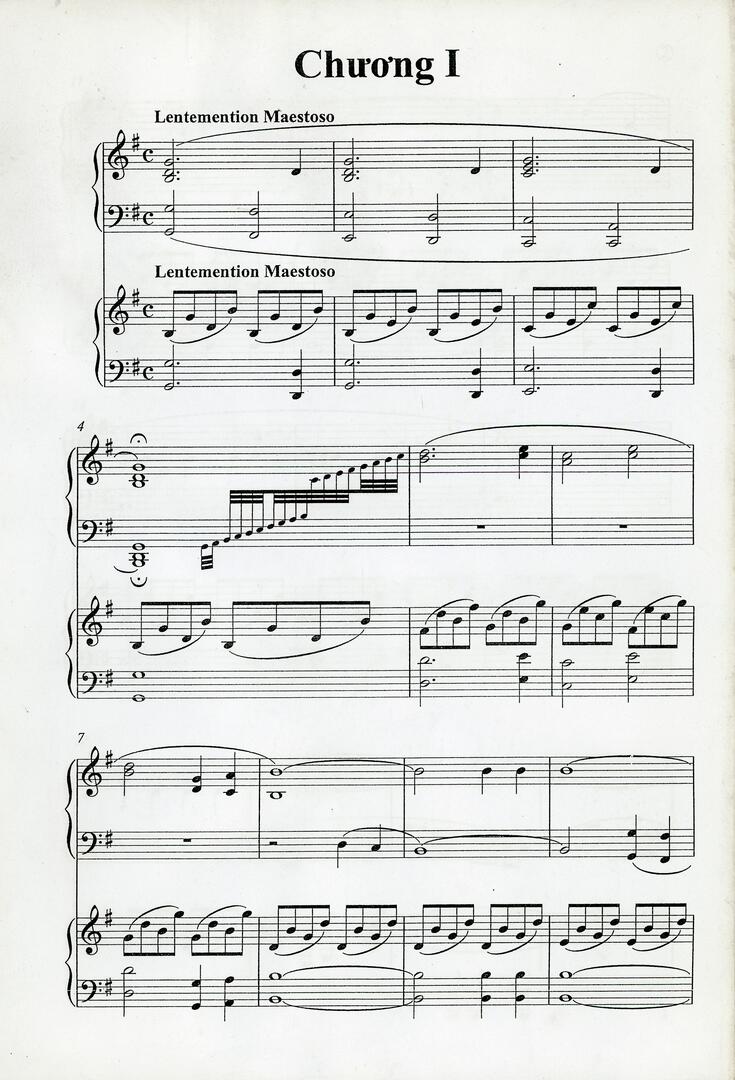
❝ In comparison to his art practice, Vũ can be considered a late bloomer in musical composition. His musical creativity did not blossom until the final decades of his life despite having been trained in piano playing. Yet, when the creative sparks are triggered, we get monumental ambitions in composing concerti, symphonies and songs. Like his art works Vũ appropriates selected motif and repeats it numerous times on different scales; but unlike his art works material from his musical compositions are firmly inspired by traditional sources dating several hundred years before. That said, the distinct influences of both Vietnamese and Russo-Germanic lineages deny any essentialist classification. Instead, what Vũ has contributed to the musical world is a continuation and preservation of classical aesthetics that is grounded on the innovations of Mozart and Shostakovich, the former being his favourite composer. Vũ always had his foresight. He wanted to create a national classical repertoire by transforming indigenous songs into piano concerti. He felt that the few classical-styled pieces in Vietnam at the time were of poor quality and not often heard live or on radio. He believed that the folk and dance music of the 54 ethnic minorities offered local composers a rich musical resource. In his conceptual plans, he intended to incorporate songs such as ‘Quảng Bình Quê Ta Ơi’ and ‘Người Hà Nội' into his compositions. ❞
Jun Zubillaga – Paw, “Between Classical and Falk. Vu Dan Tan, the Composer”, in: Vu Dan Tan and Music, Goethe Institut, Hanoi, 2016, p. 34-35