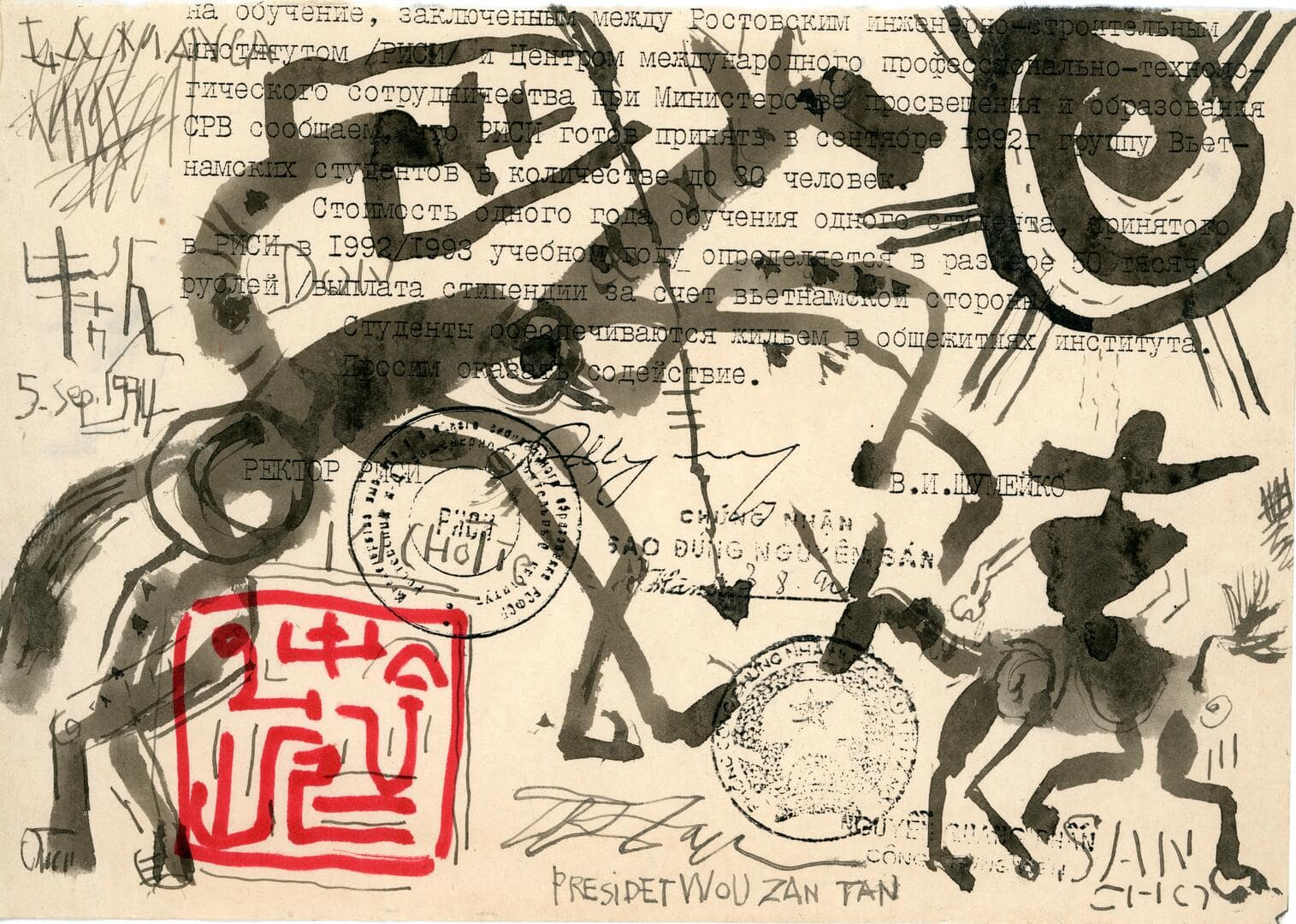
Vu Dan Tan, born into a family of a playwright and publisher, developed a fascination for literature from a young age. His creative practice reflects the convergence of his interests in visual arts, language, and literature in various forms.
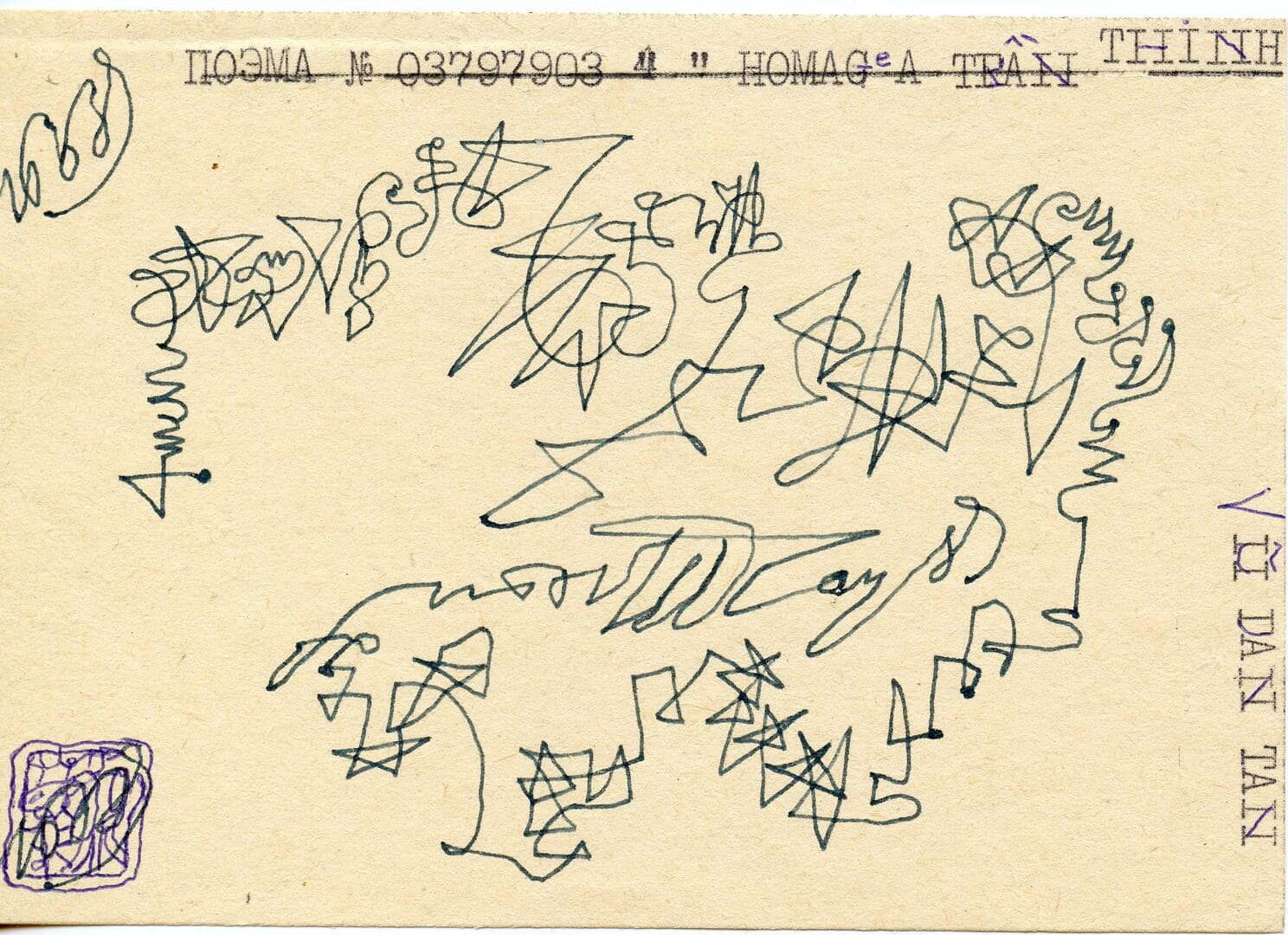
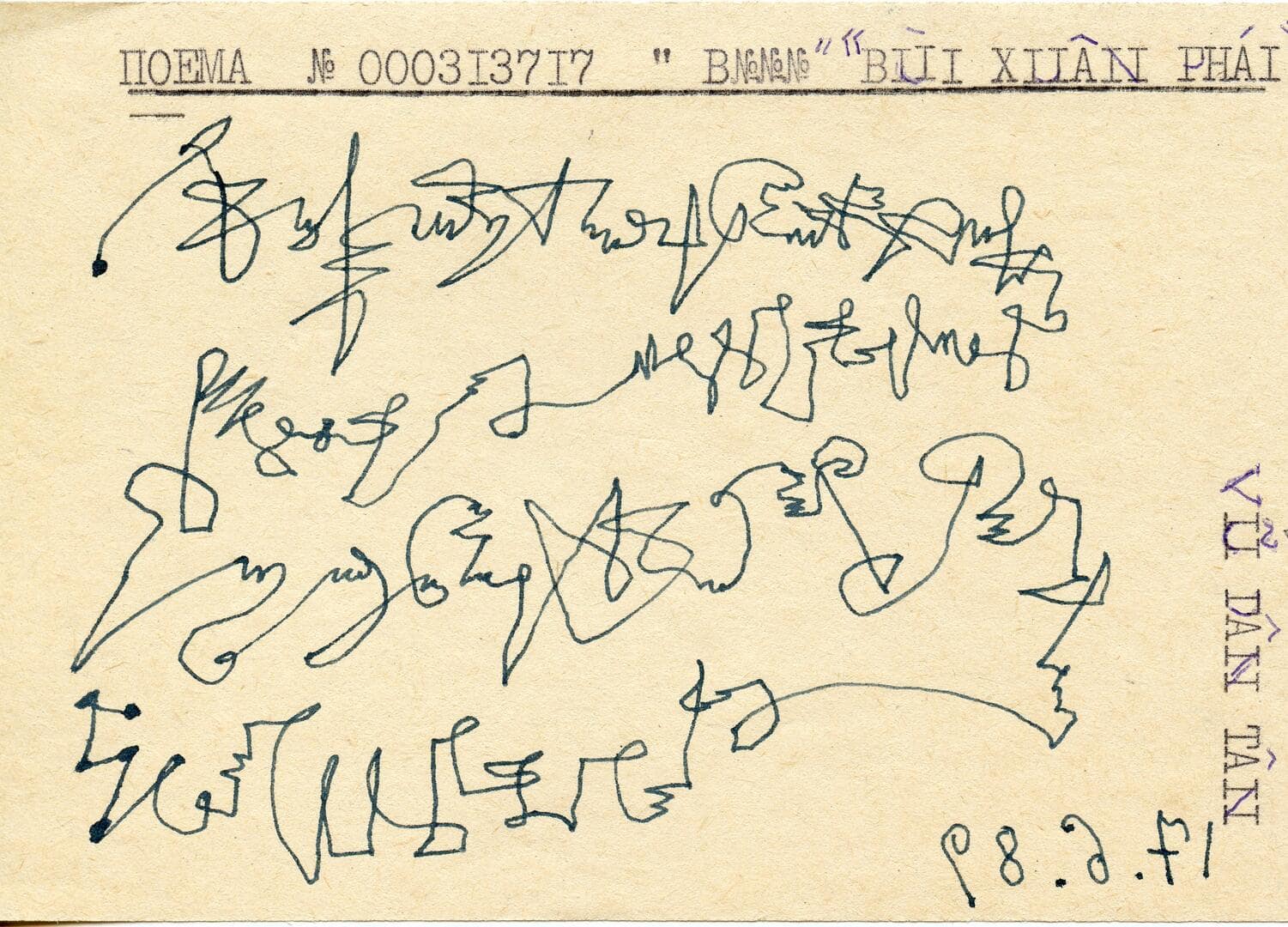
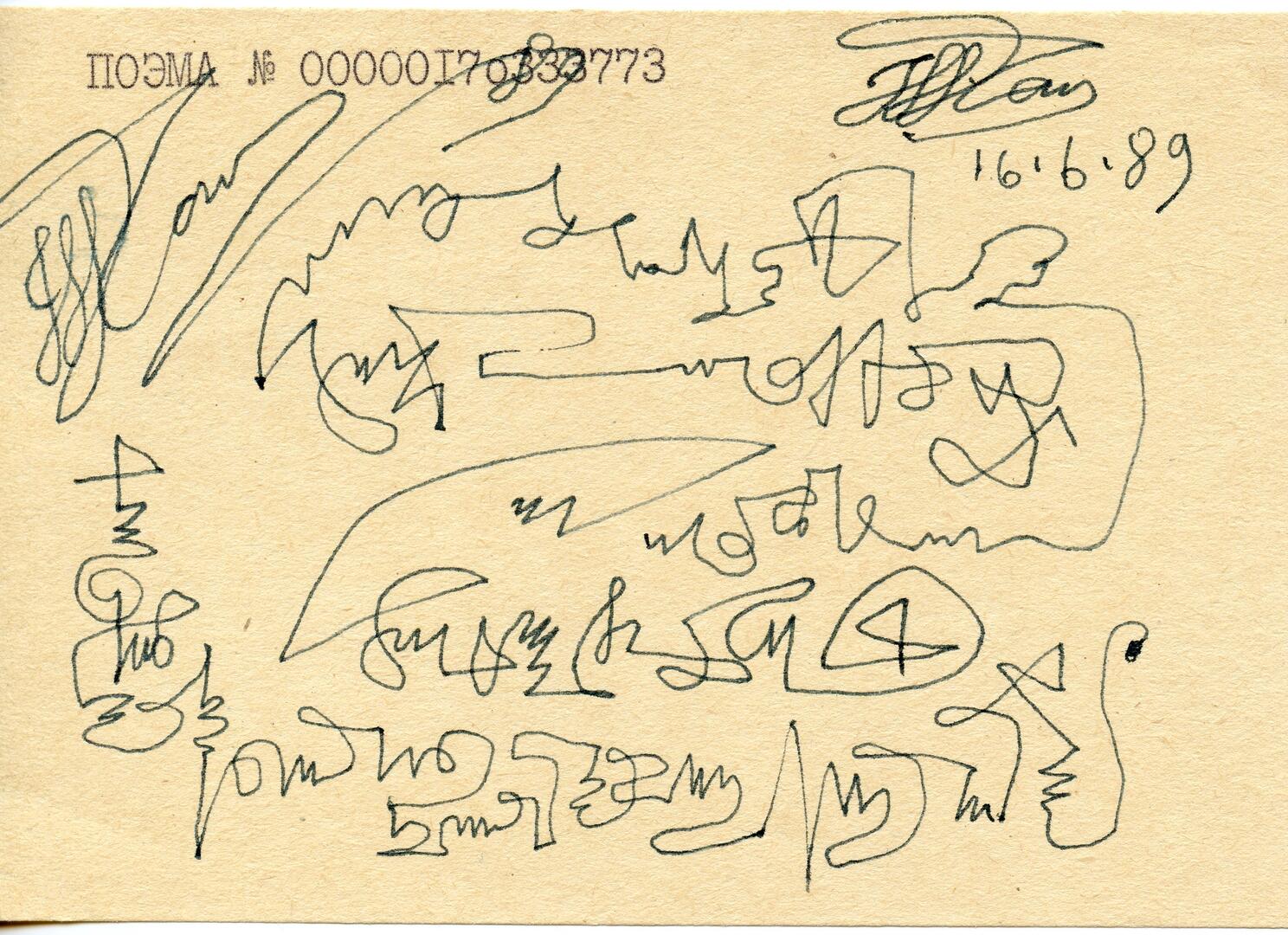
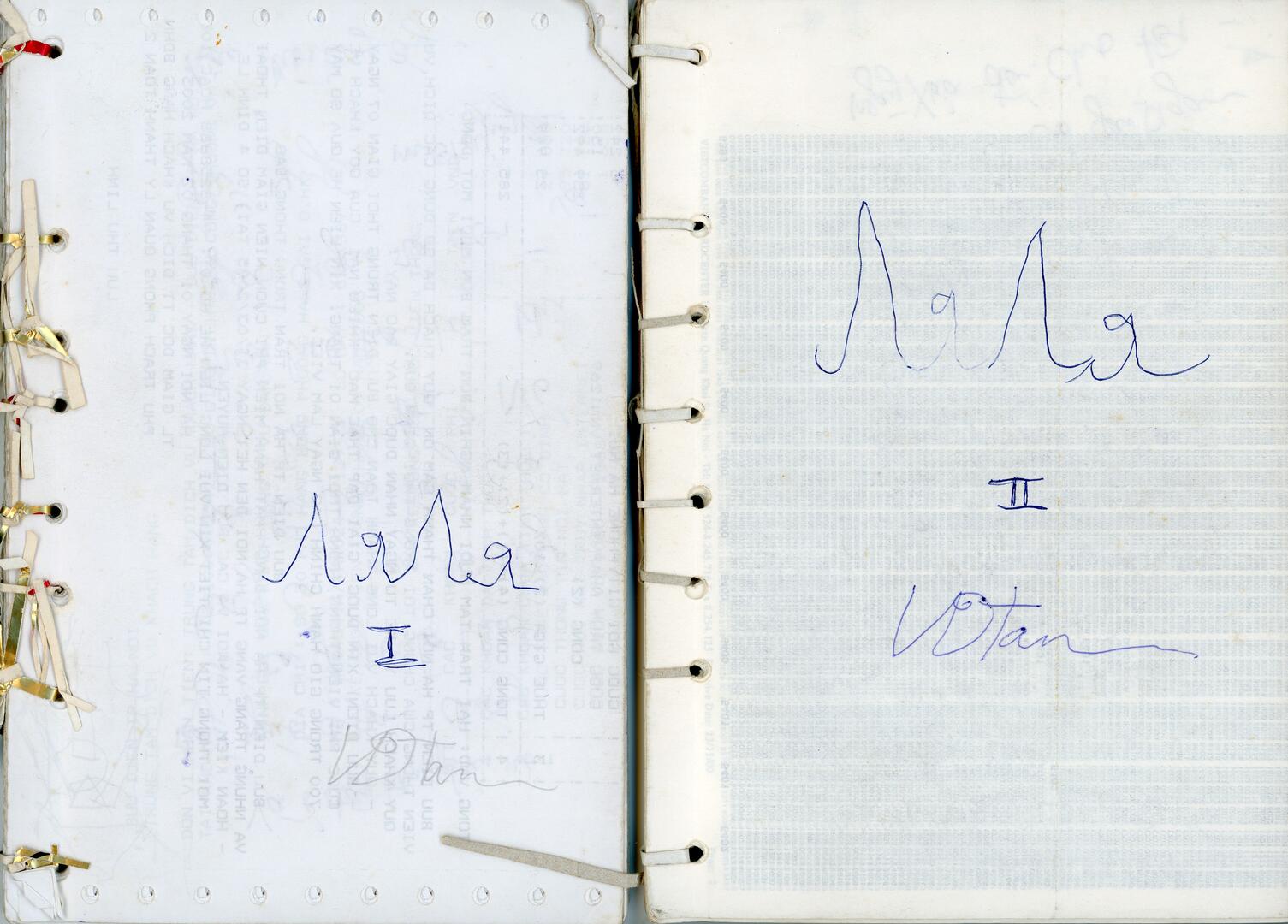
Firstly, he consistently integrates literary content and language/textual elements into his drawings and paintings. Some of these works consist entirely of text, such as a series of small drawings from 1989 that utilize invented alphabets, evoking associations with poetry or musical scores.
Drawings with writing , ink on paper, 9 x 13 cm, 1989
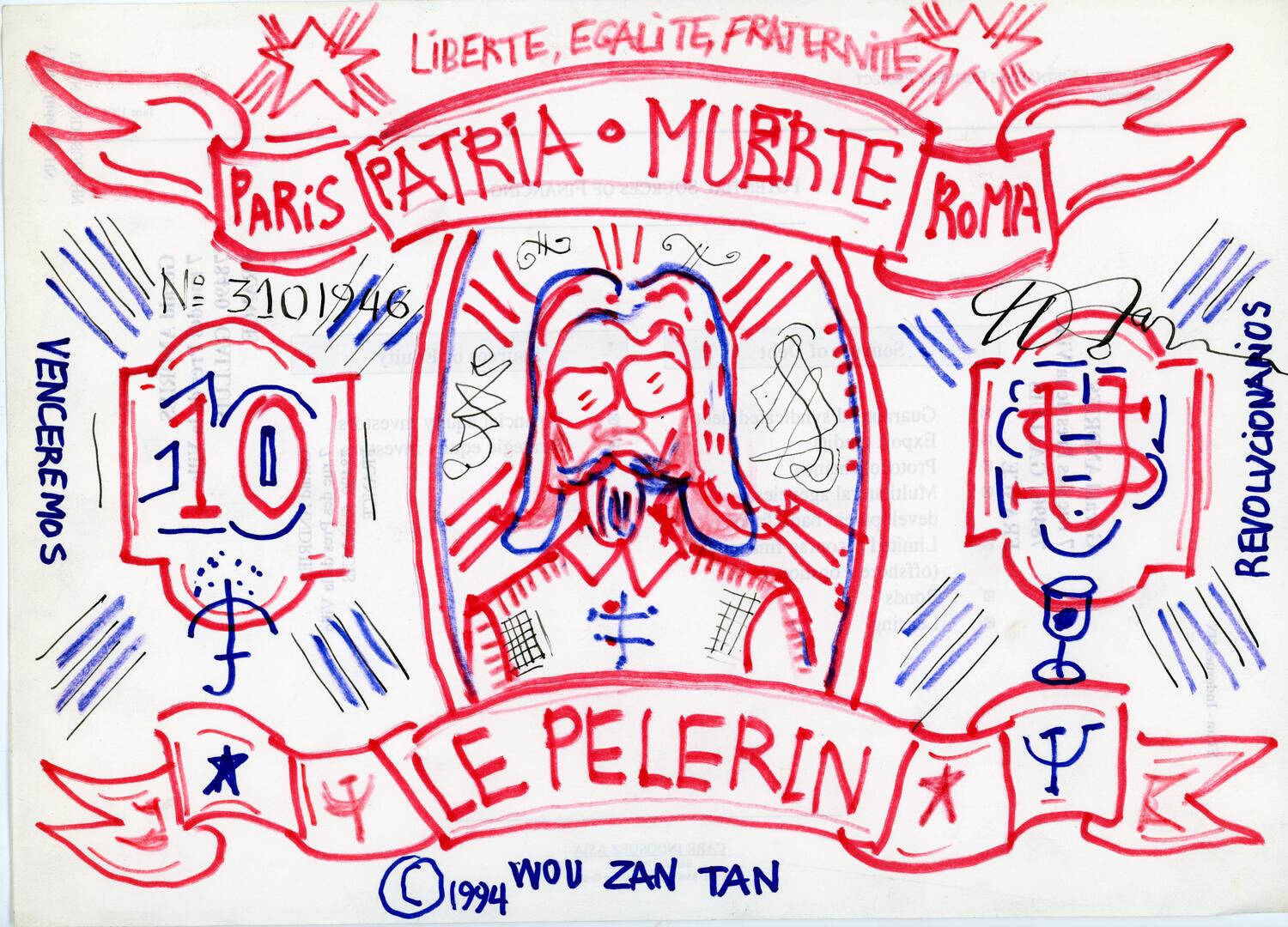
Secondly, the artist frequently incorporates slogans, aphorisms, and literary quotations into his works, using them in both their original context and in a rephrased, ironic manner.
10 dollars 1994, ink and synthetic paint on paper, 21 x 30 cm, 1994
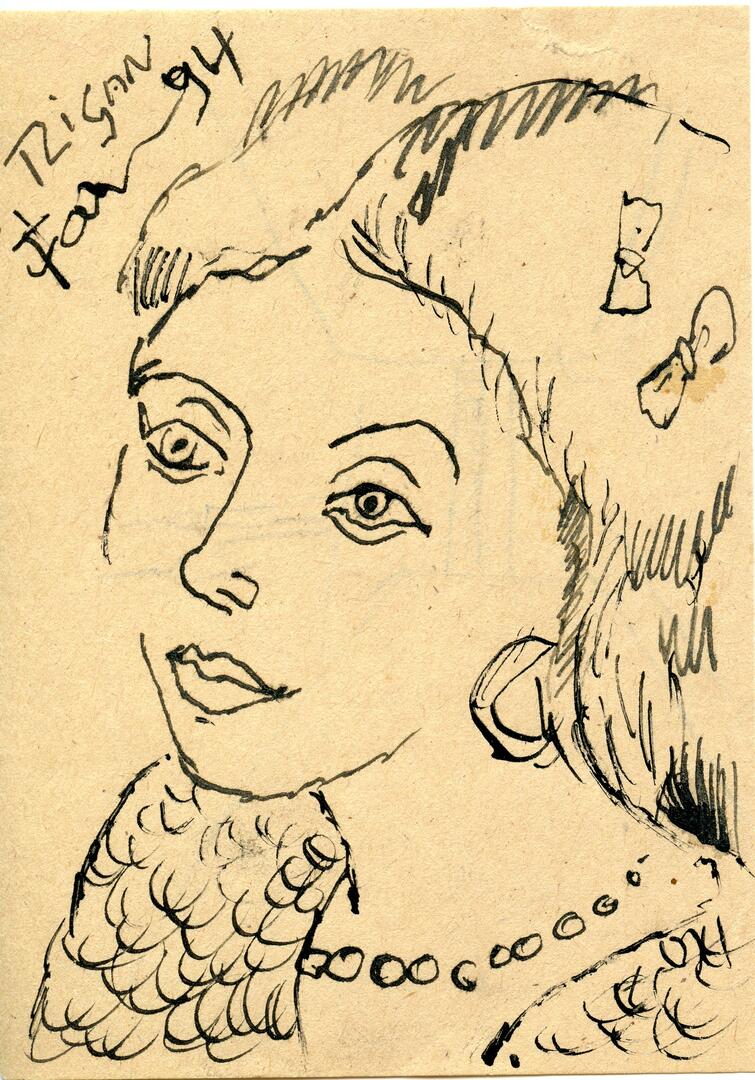
The relationship between literature and art is also evident in the artist's visual repertoire, which features figures such as Esmeralda, Carmen, Don Quixote, Sancho, and Dulcinea del Toboso, among others.
Don Quixote & Sancho, ink and gouache on paper, 14,8 x 21 cm, 1994
❝ It is essential to acknowledge that the artist incorporated quotations and figures from global mythology, literature, and history into his creations not merely to demonstrate his wide erudition or to narrate historical accounts. Rather, his primary purpose was to respond to contemporary events, evoking complex associations with the past while prompting the viewer to contemplate significant universal themes. ❞
Natalia Kraevskaia, “Being contemporary: the interdisciplinary approaches in the art practice of Vũ Dân Tân”, VNU Journal of Interdisciplinary Sciences and Arts, vol.1, # 2, 2025, p. 47-48
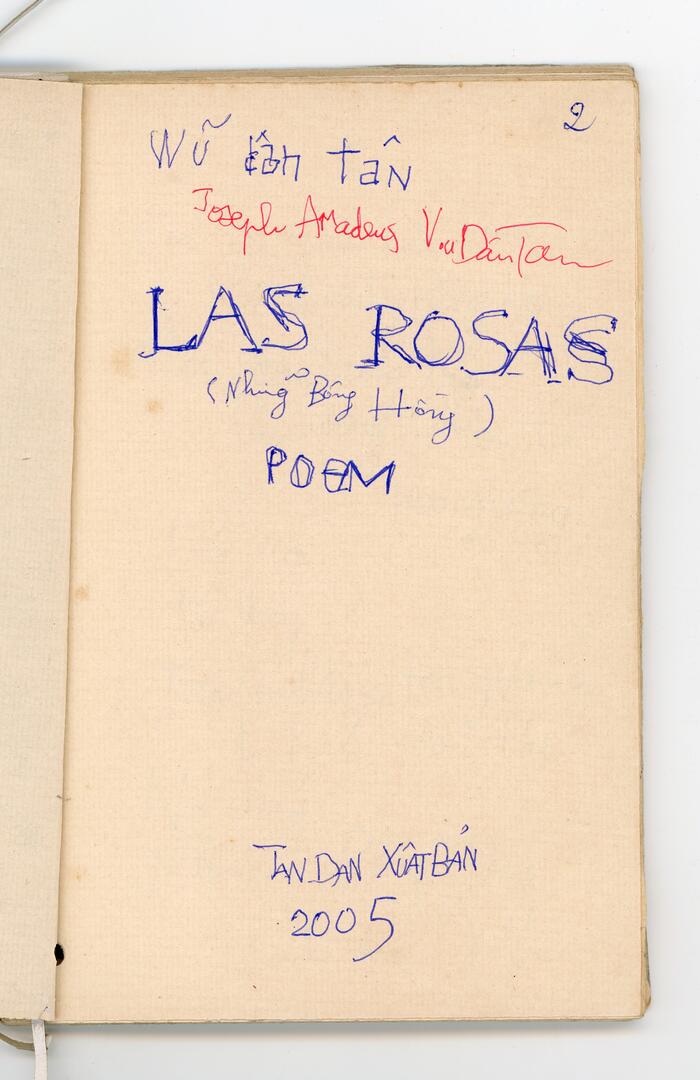
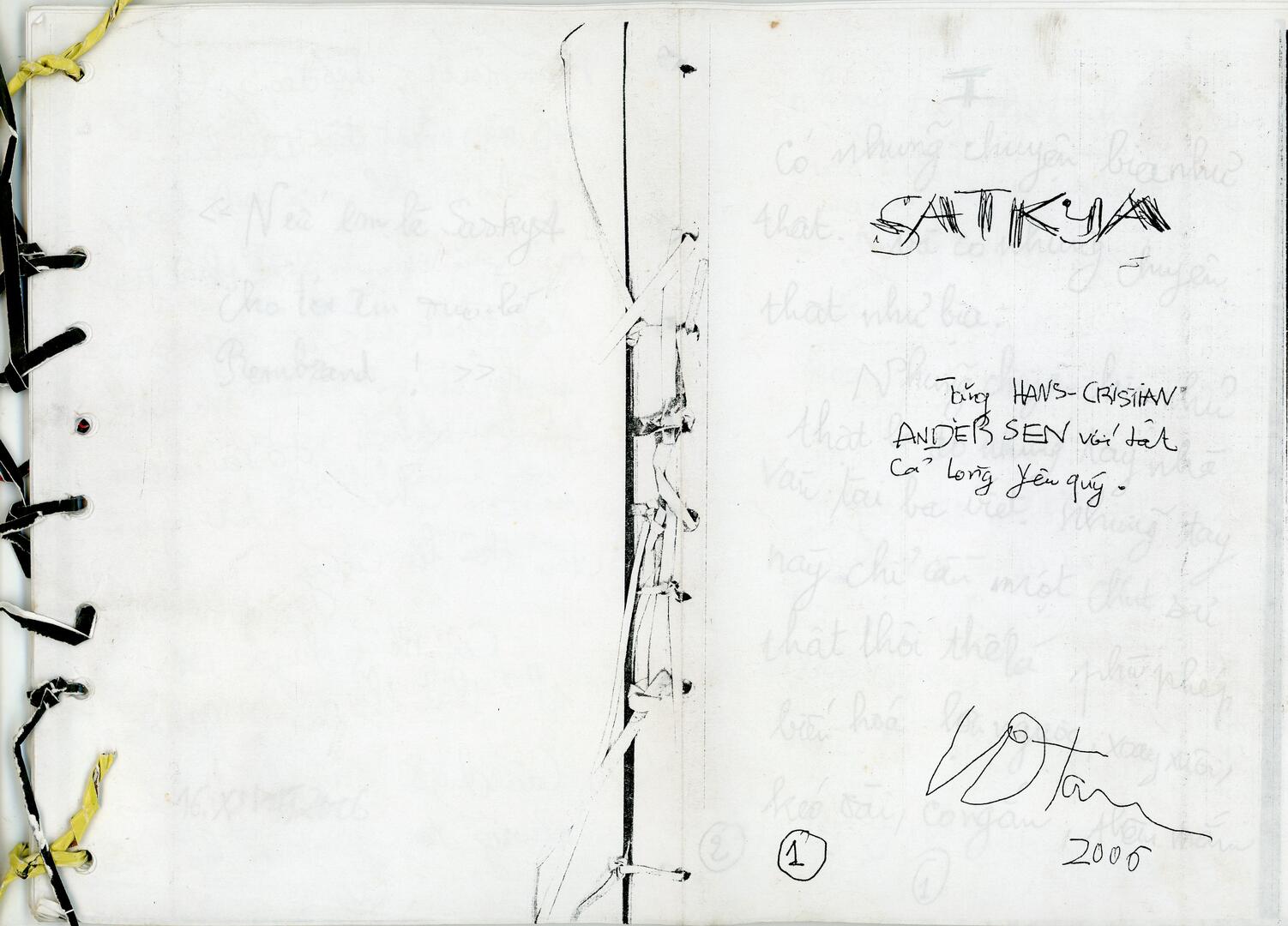
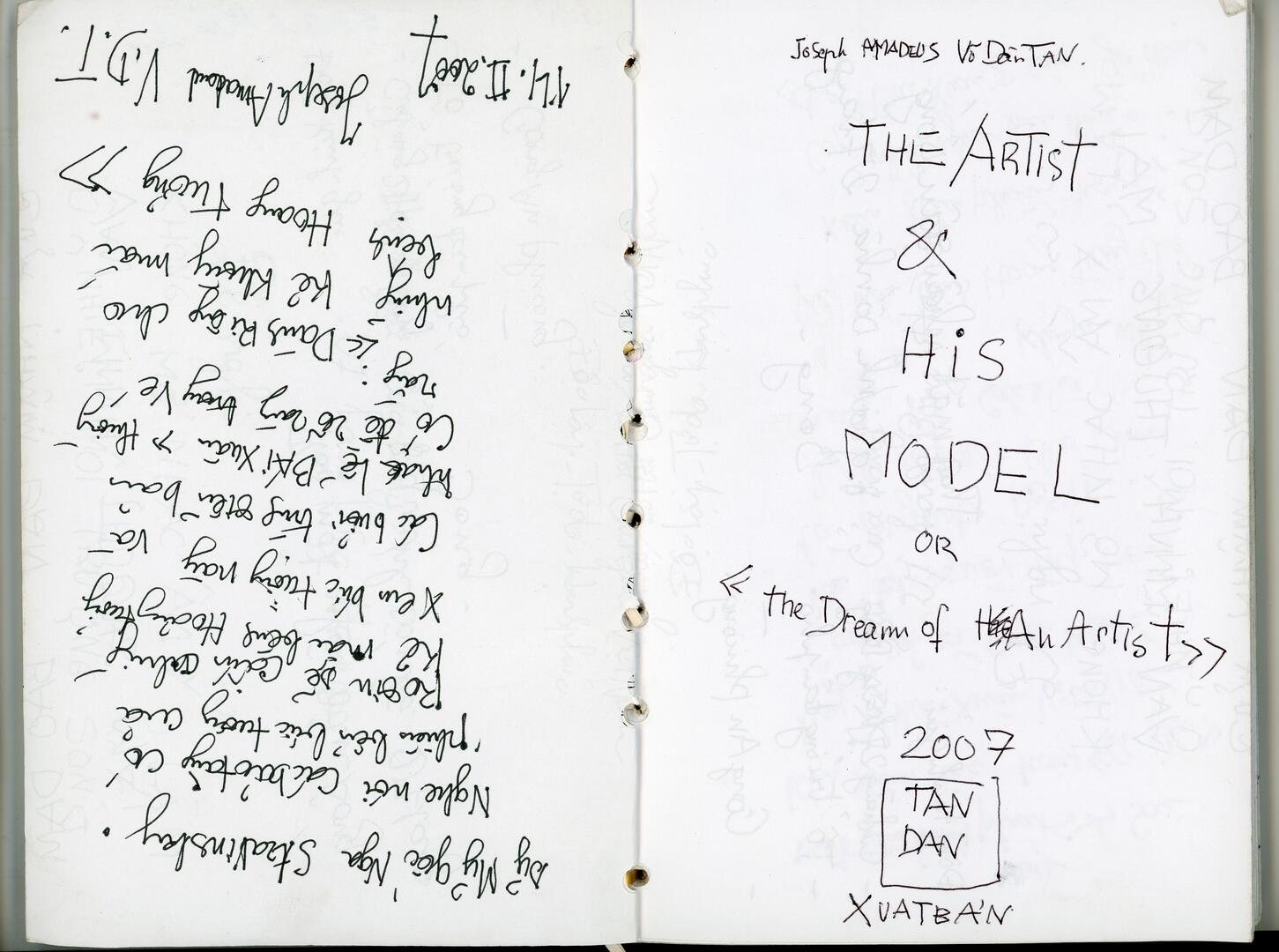
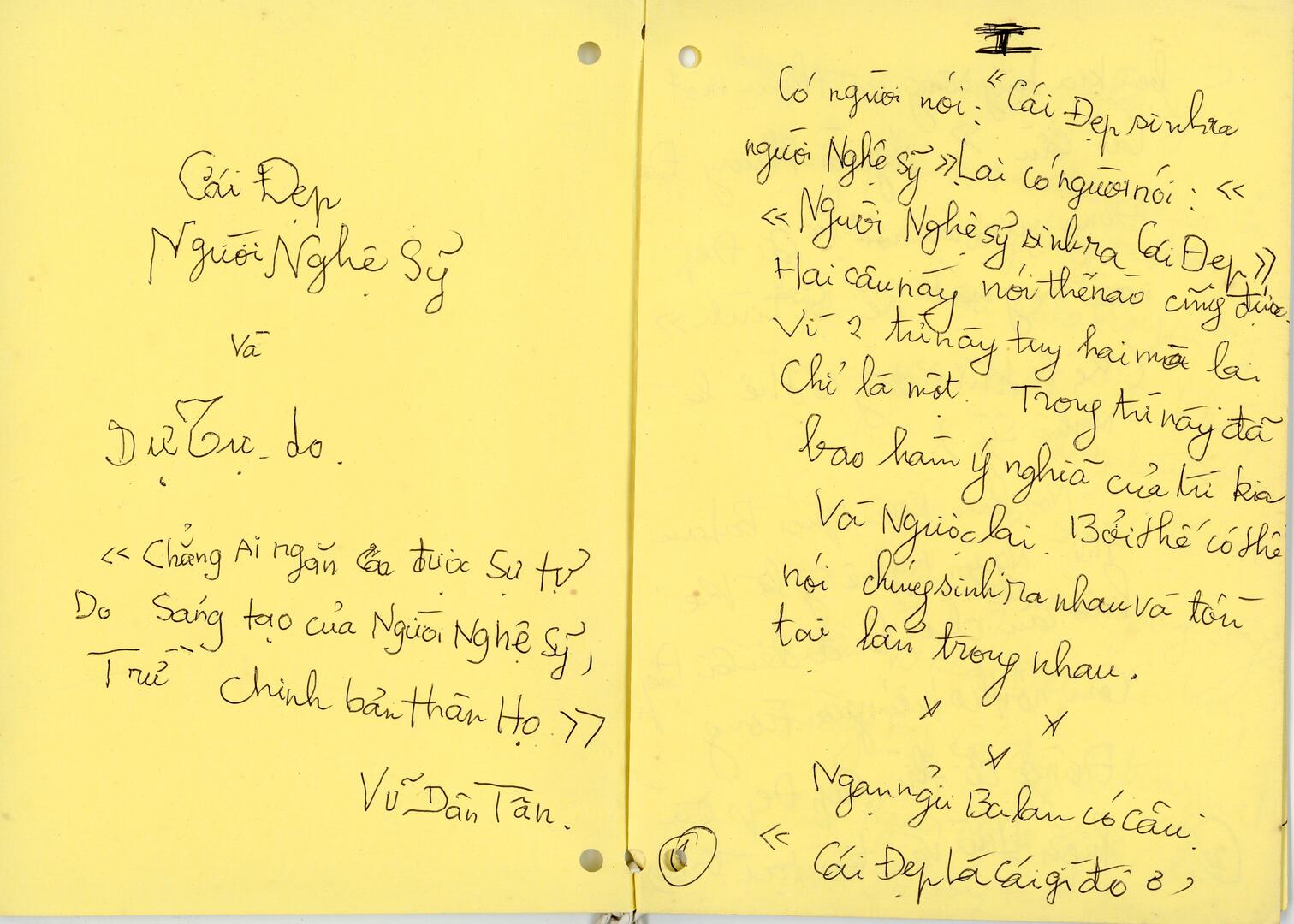
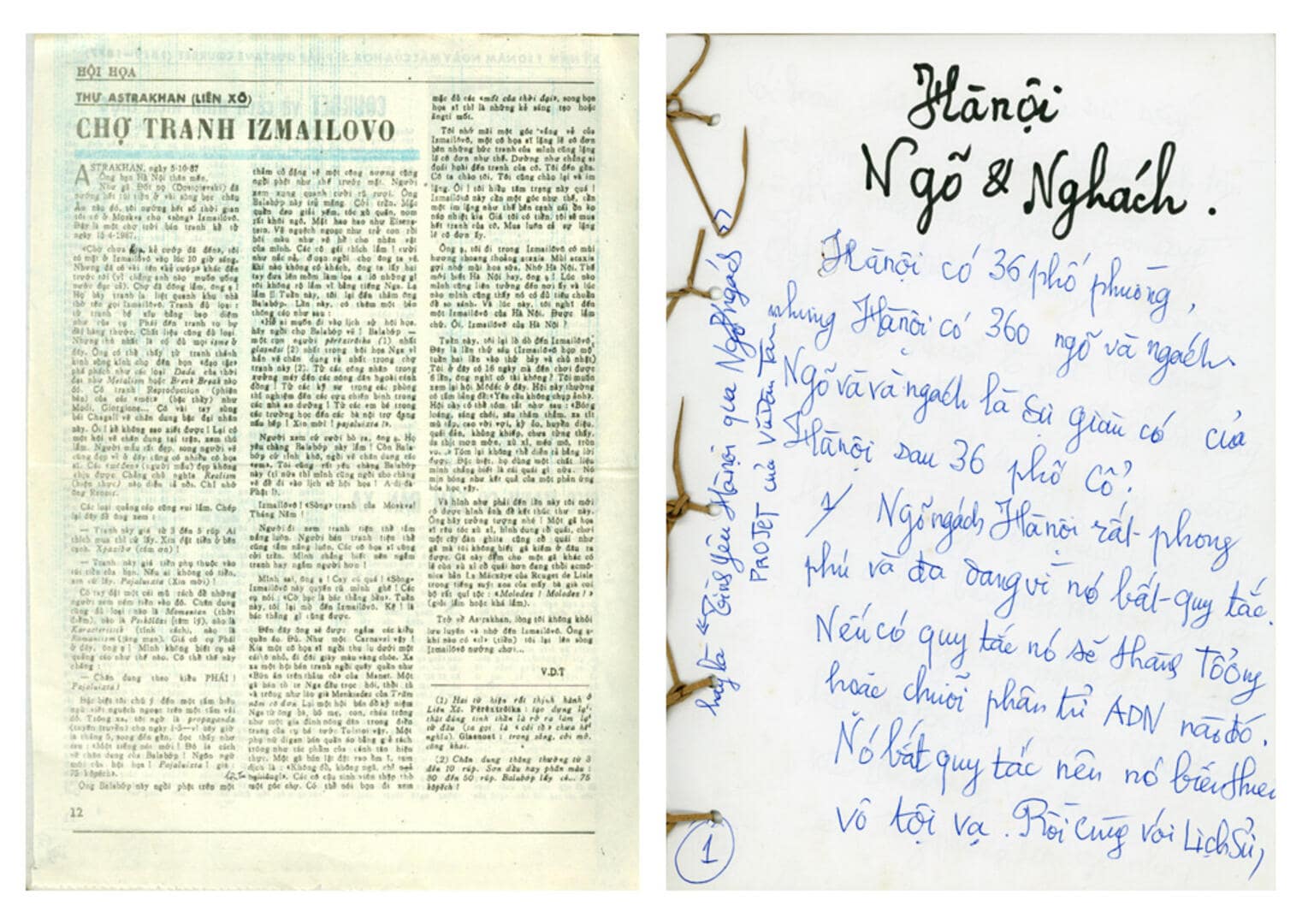
Although the audience is aware of the linkage between art and literature in Vu Dan Tan's artworks through visual symbols and thematic allusions (references to Cervantes, Swift, or Hugo), his own literary pursuits remain largely unrecognized, save for a few poetic artist statements that accompany his art in some publications. Meanwhile, Vu Dan Tan has composed poems and essays, which he refers to as novels. These essays primarily address topics such as aesthetics and the nature of creativity (‘Saskia’ and ‘The Artist & His Model’), art and the freedom of expression (‘A Beauty of an Artist and His Involvement with Freedom’), as well as various facets of the concept of freedom in general (Lyalya).