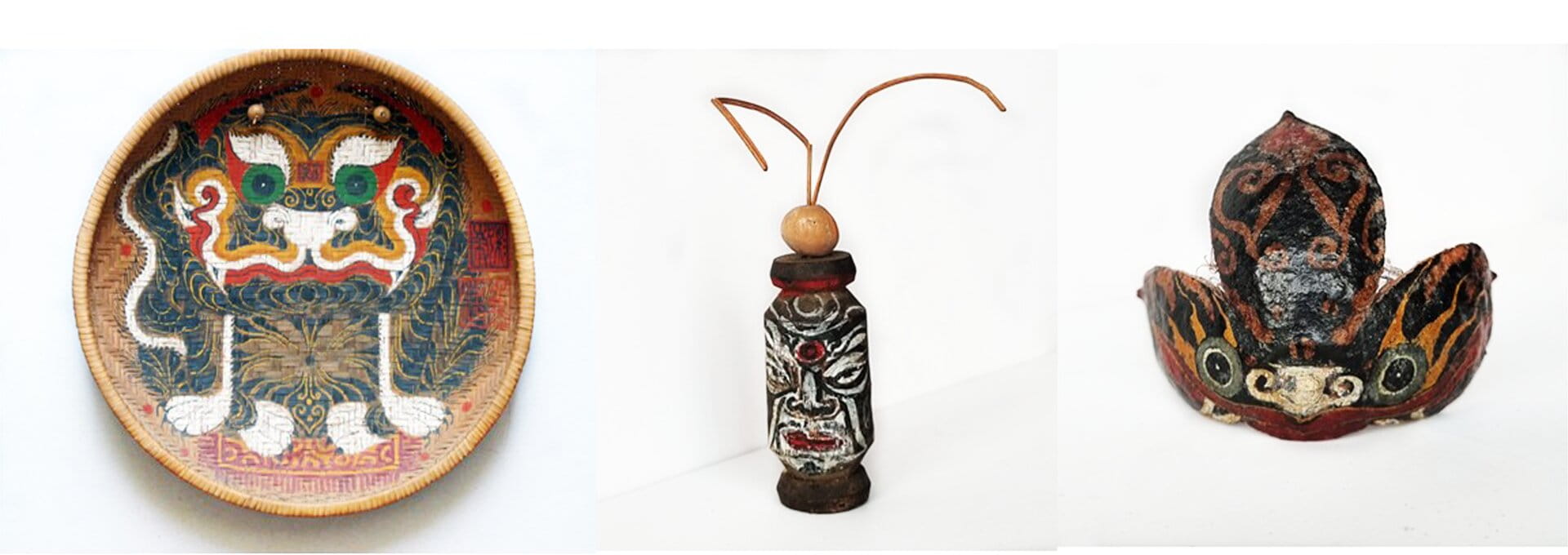
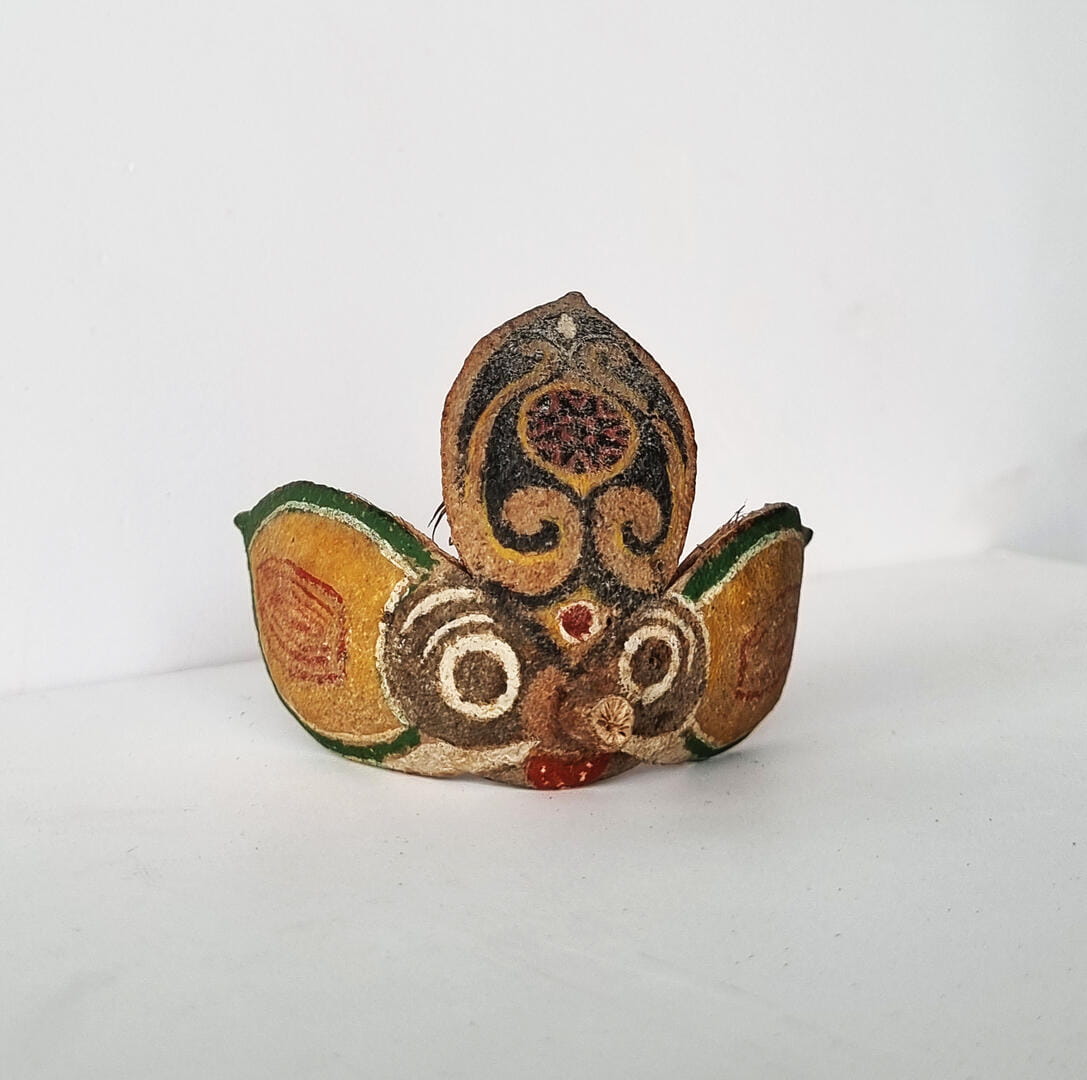
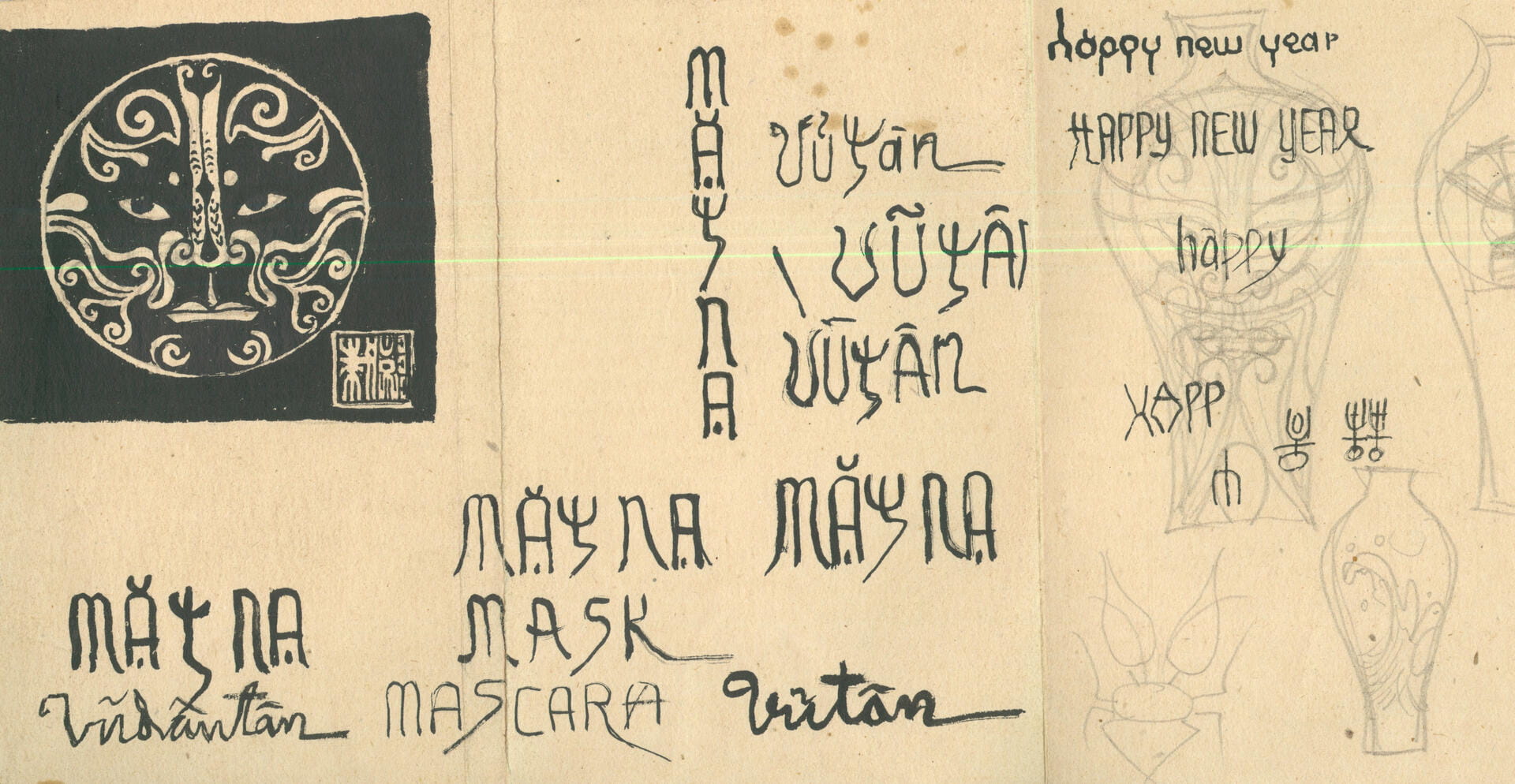
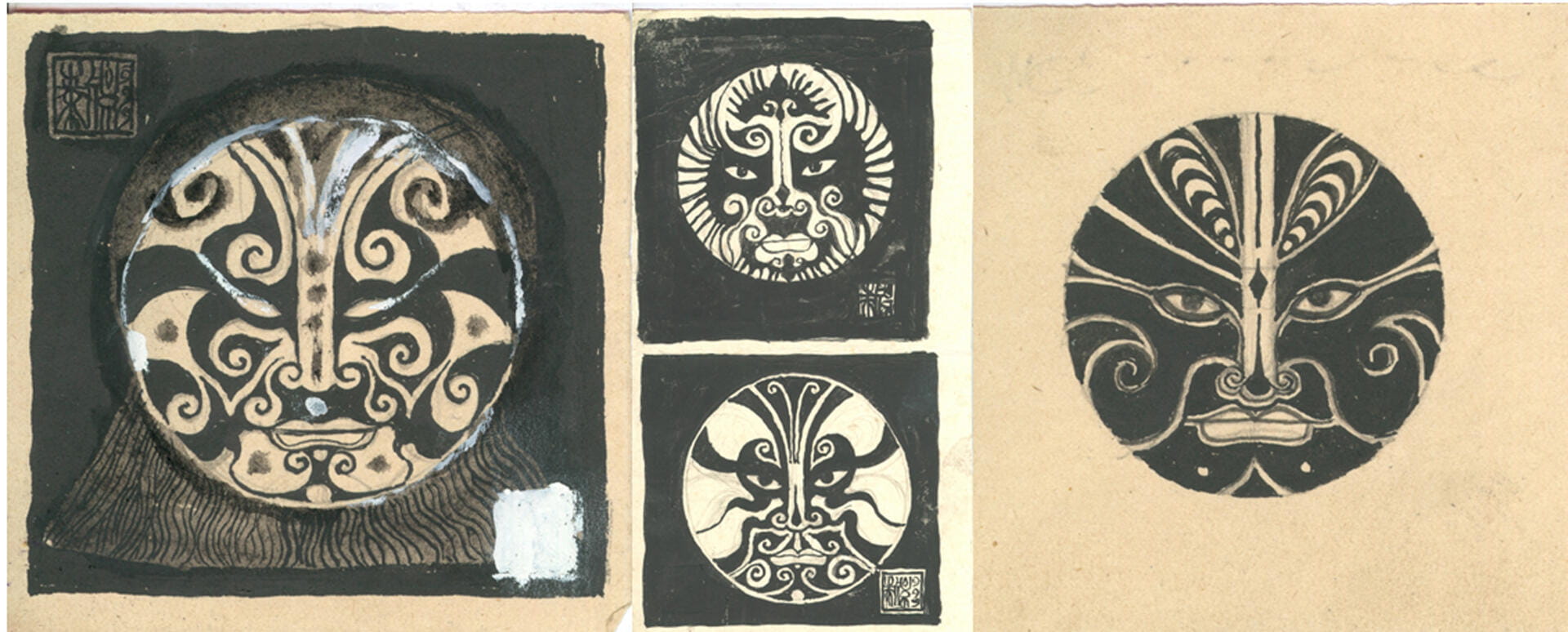
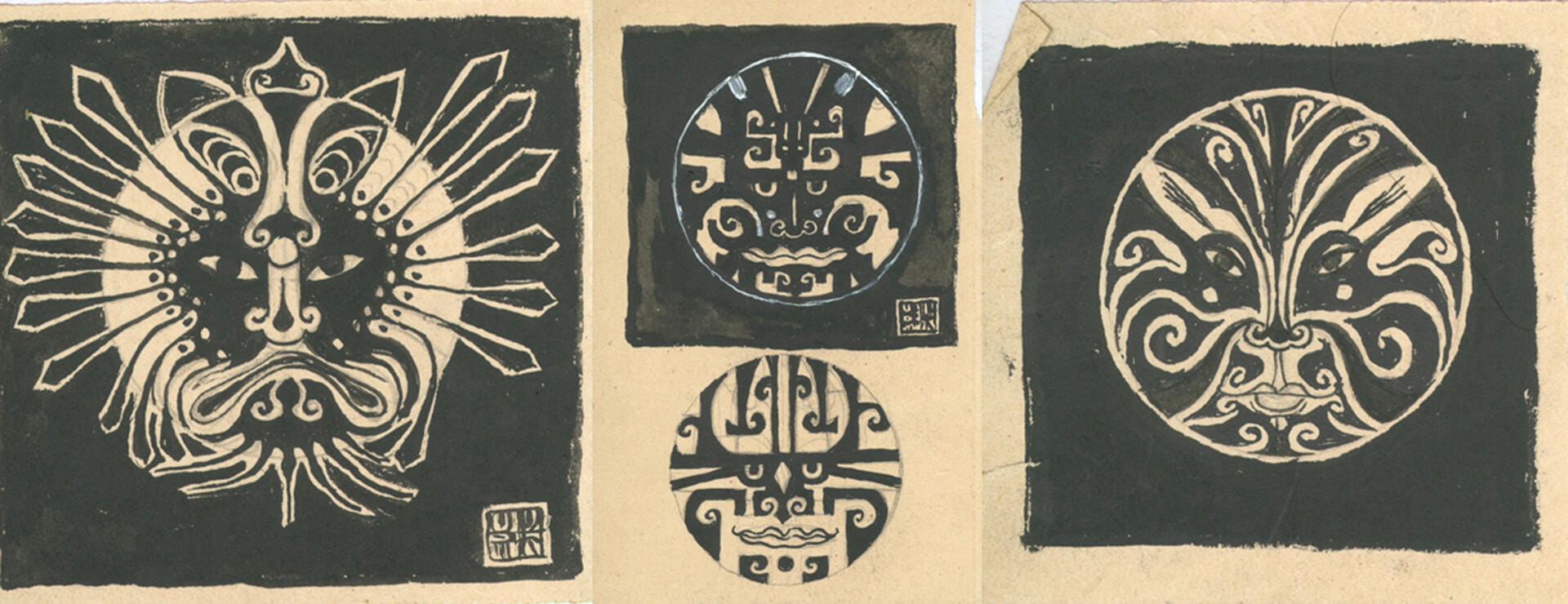
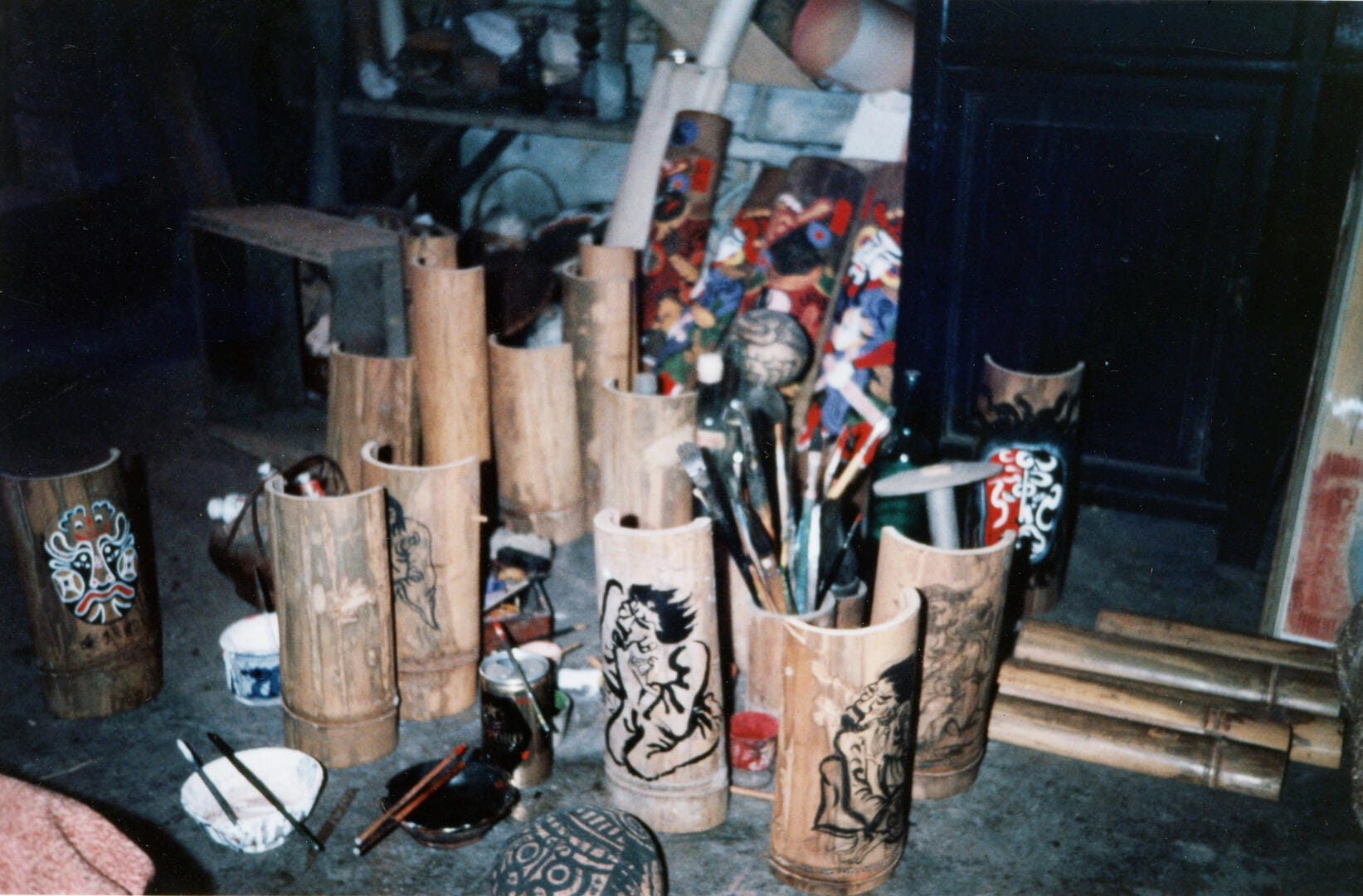
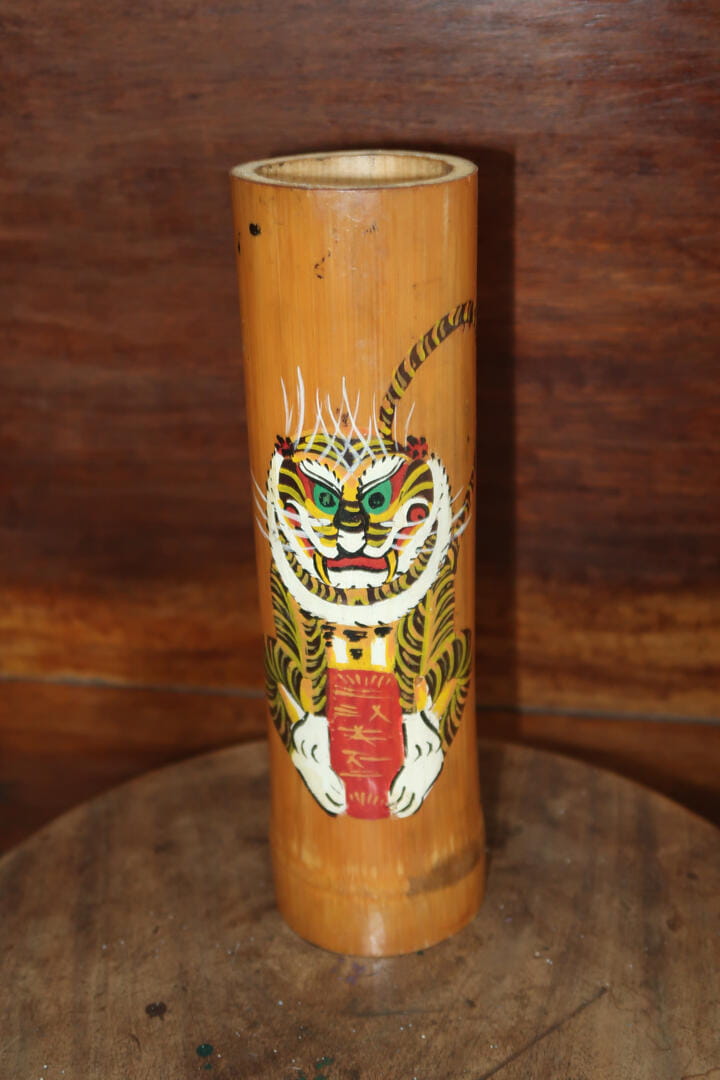
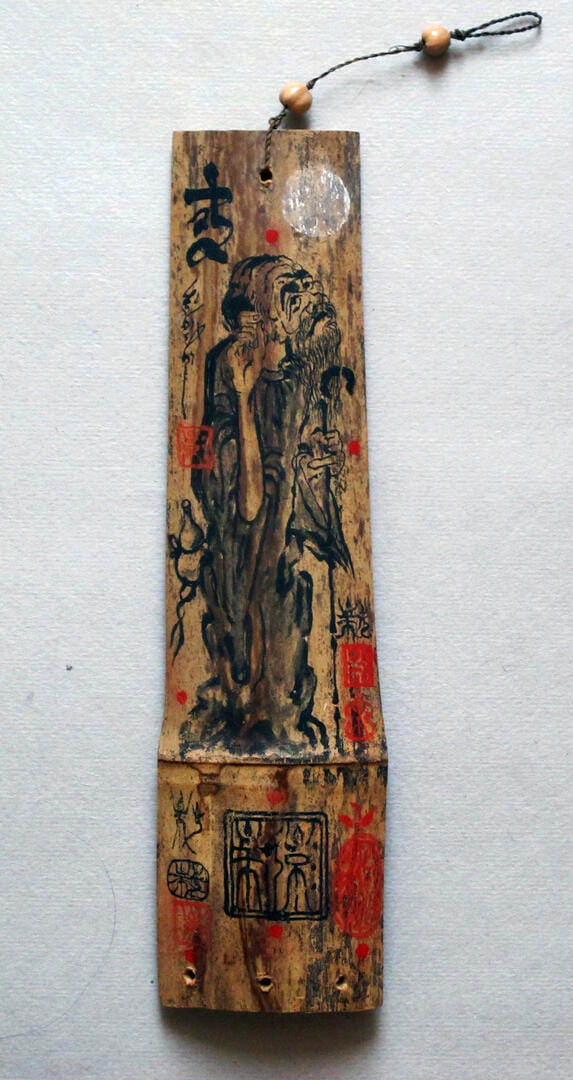
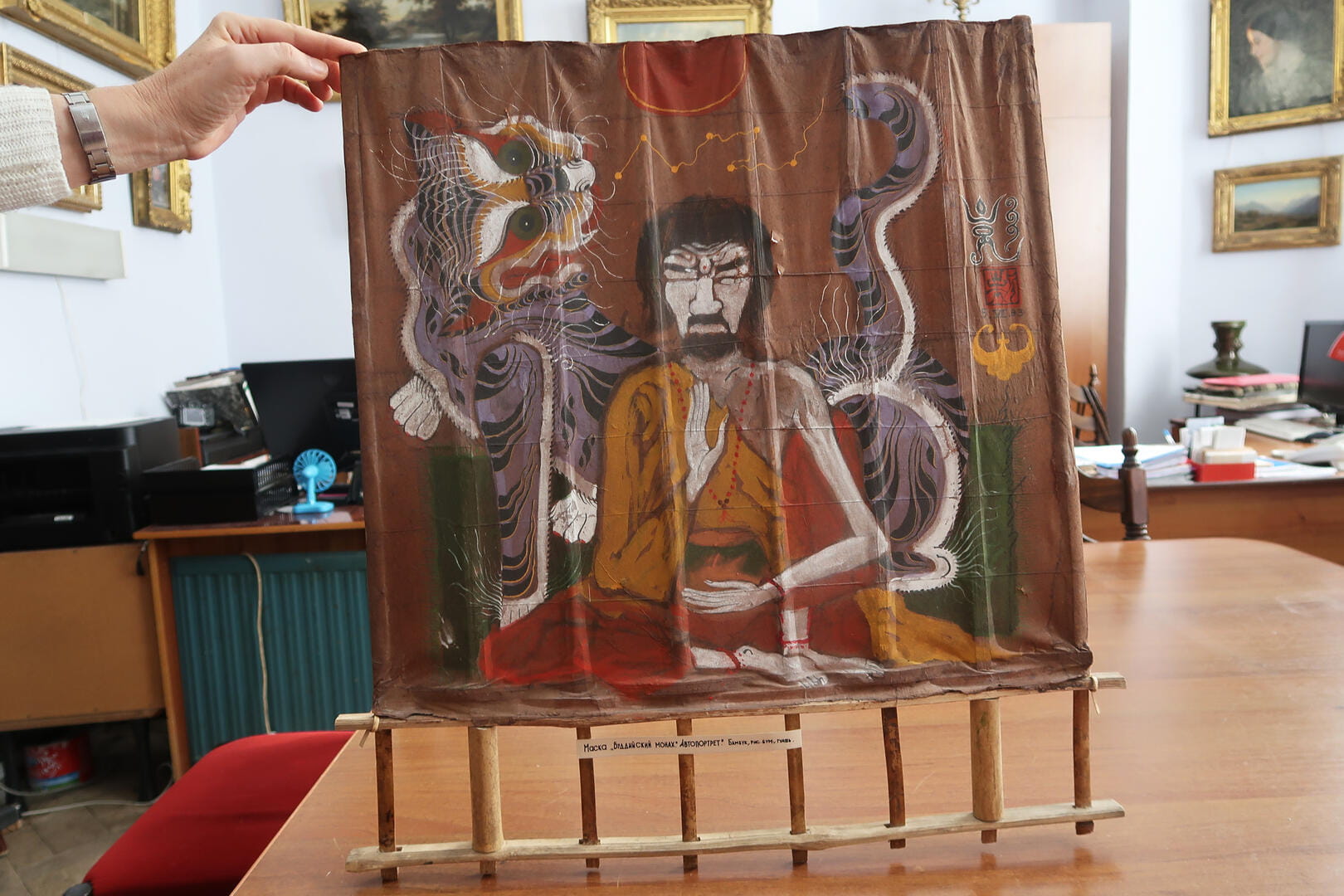
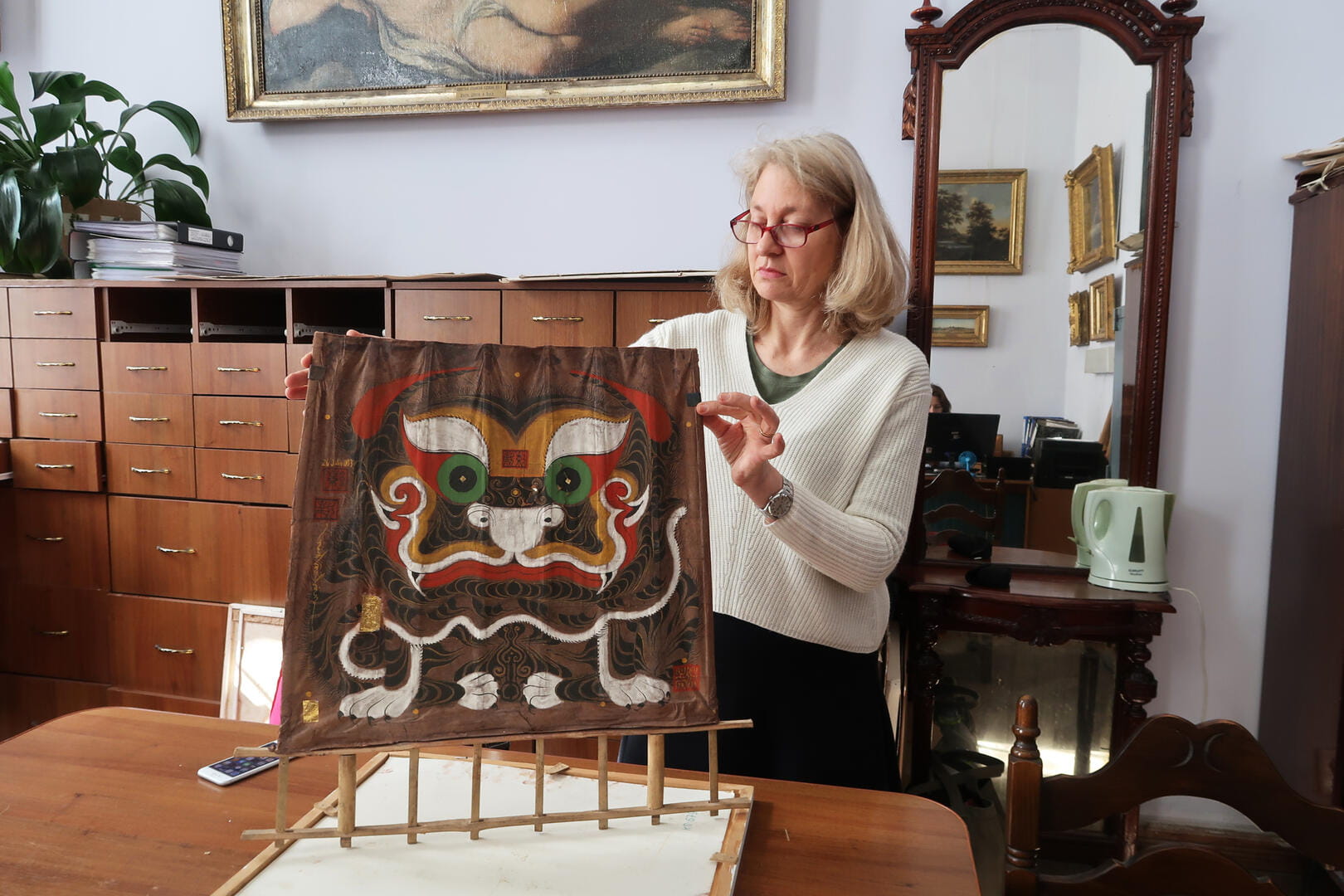
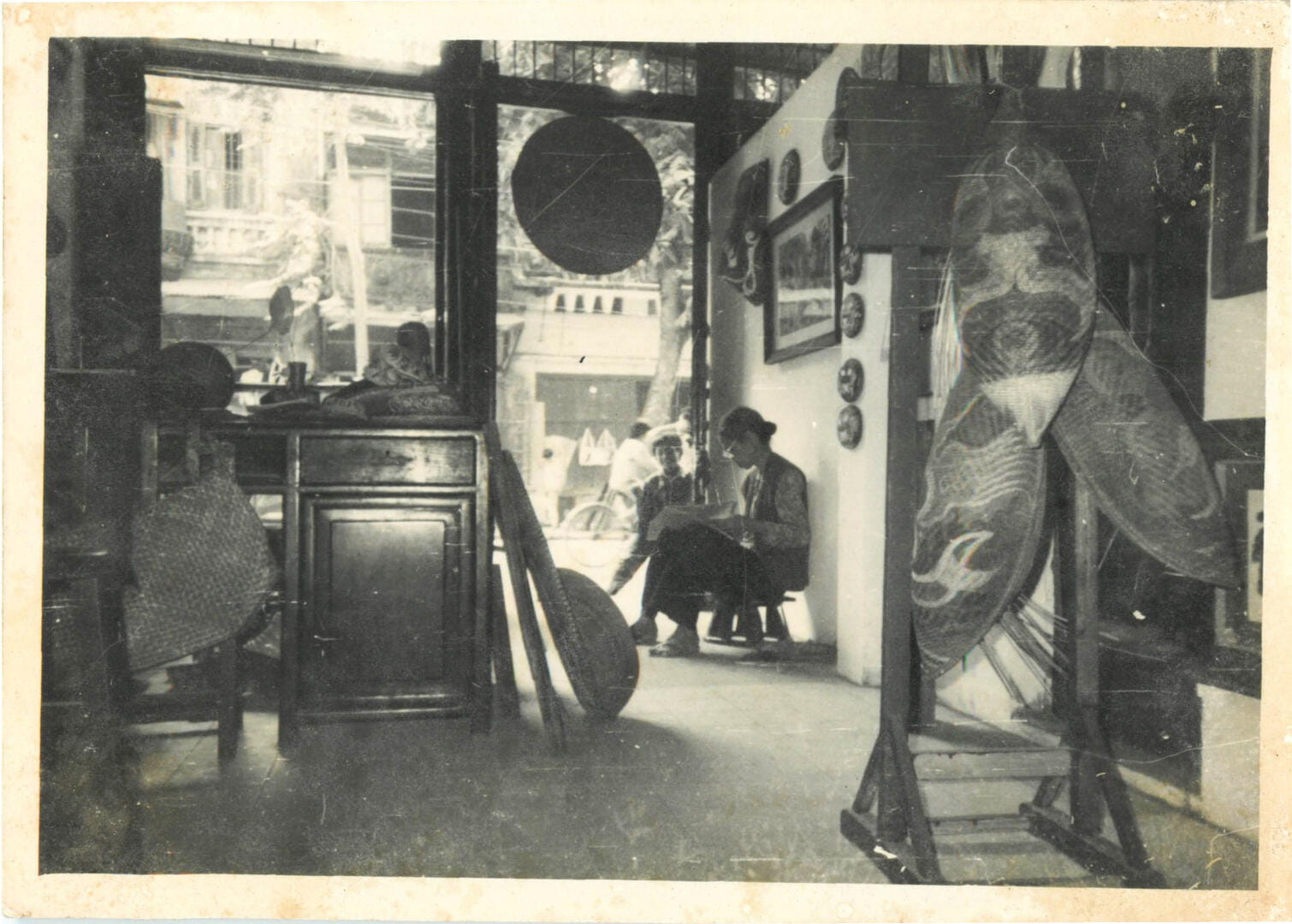
In the 1970s, he utilized materials such as dried fruit shells and bamboo trunks for his masks, while in the 1980s, he employed baskets woven from bast or traditional fans used for winnowing rice. It is noteworthy that even at that time, the artist consistently demonstrated a desire to create his works using unconventional materials or prefabricated items, thereby blurring the lines between fine art and applied arts. Art historian Iola Lenzi states, “Vũ’s masks defied the norm in their medium, imagery, lack of signature, and purpose” (Lenzi I. “Venus in Vietnam: Women and the Erotic in the Art of Vũ Dân Tân and Nguyen Nghia Cuong.” In Venus in Vietnam, Goethe Institut, Hanoi, 2012, p.23). Additionally, discussing the series of basket masks, she specifies their multimedia character and performative potential: “But while Basket Masks series starts with borrowed baskets and familiar iconographic elements, it transforms and reinterprets these to propose new, open narratives unknown in traditional culture. In practice Tan’s masks were not performed. But in their suggestion of Vietnam’s participative cheo theatre, in their hinting at changing identity, and in their connotation of music and movement, Basket Masks disclose a performative character. In their intertwining of the visual and potential for improvised viewer response, Basket Masks harbors characteristics of installation, unknown in Vietnam in the 1970s. The series does not literally combine different disciplines, yet conjures them—song, theatrical gesture, dance movement.” (Lenzi I. “Music as Freedom. The Place of Sound in the Visual Practice of Vu Dan Tan”, catalogue of the exhibition Vu Dan Tan and Music, Goethe Institut, Hanoi, 2016, p. 21).